
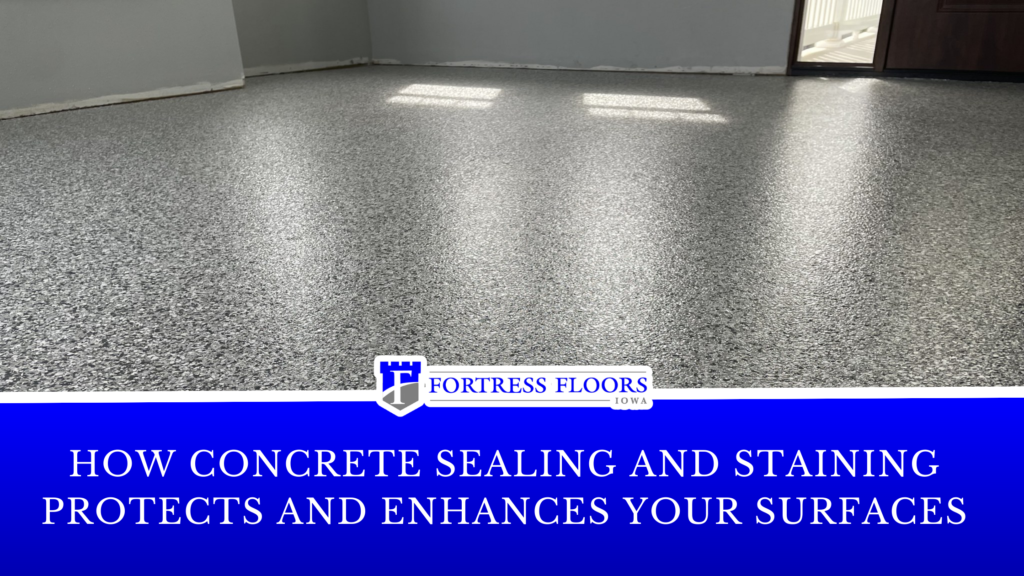
If you’ve spent a winter or two in Decorah, you already know what it does to concrete. Freeze and thaw cycles chew away at the surface, road salt finds every crack it can, and the moisture off the Upper Iowa River doesn’t help either. A slab that looked great the day it was poured ends up collecting dust, dull gray patches, and stains that no amount of scrubbing seems to touch.
That’s the problem, concrete sealing and staining fixes. It brings the color back into worn concrete, and just as importantly, it protects the slab from the same conditions that wore it down. Here’s how the process works, why it holds up so well in Decorah, and what you can expect once the job is done.
Why Concrete Needs Sealing and Staining
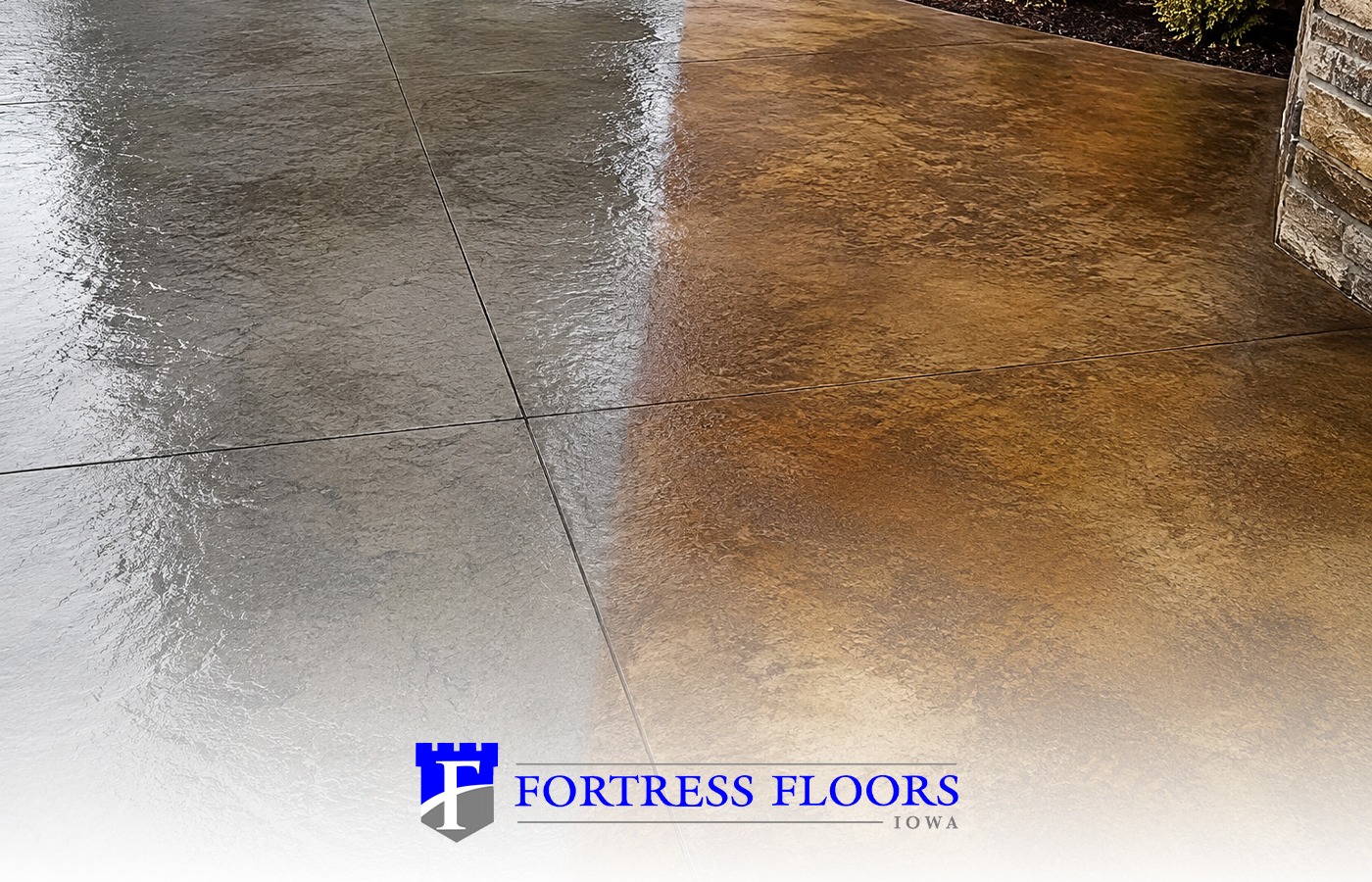
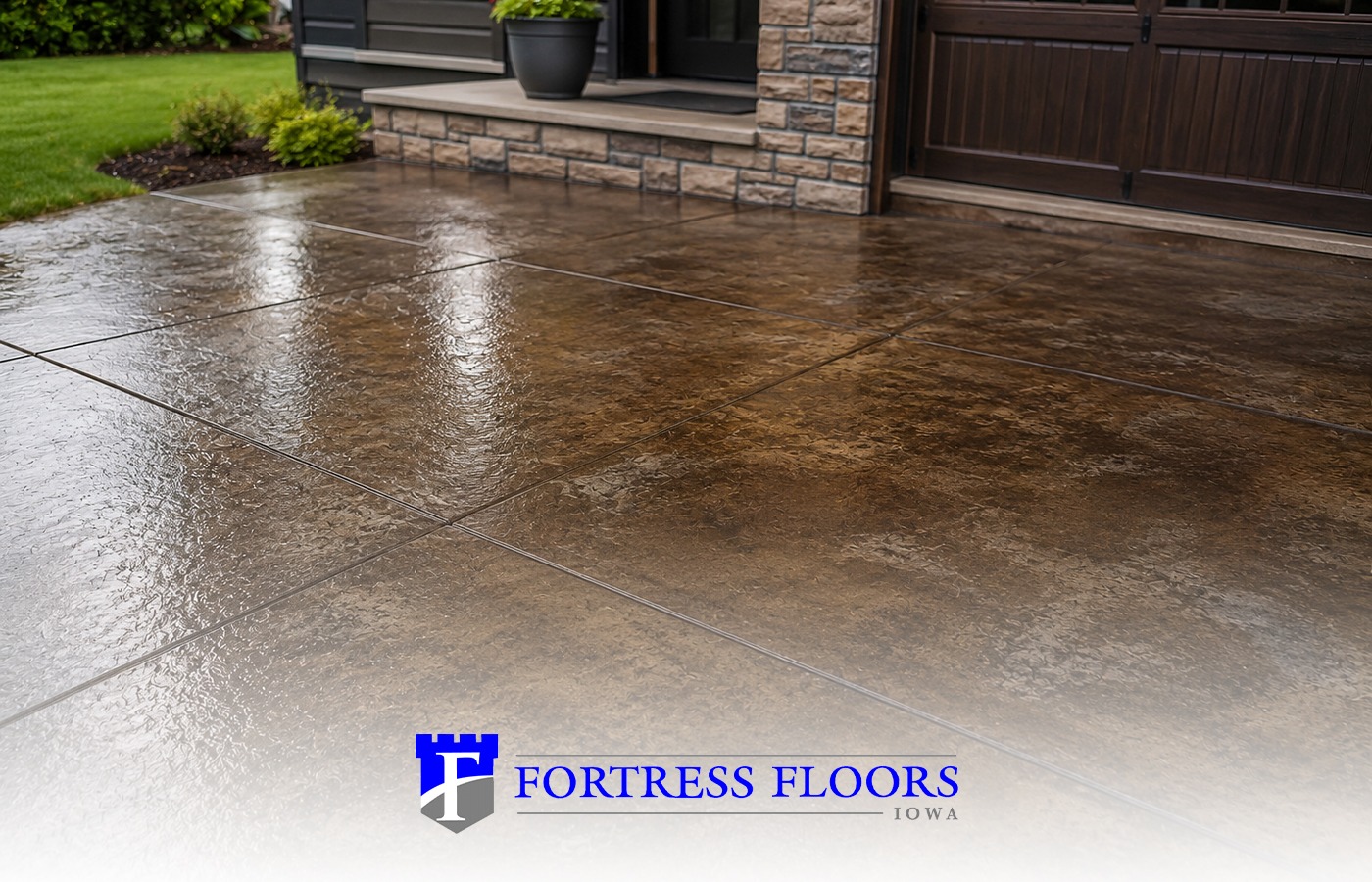
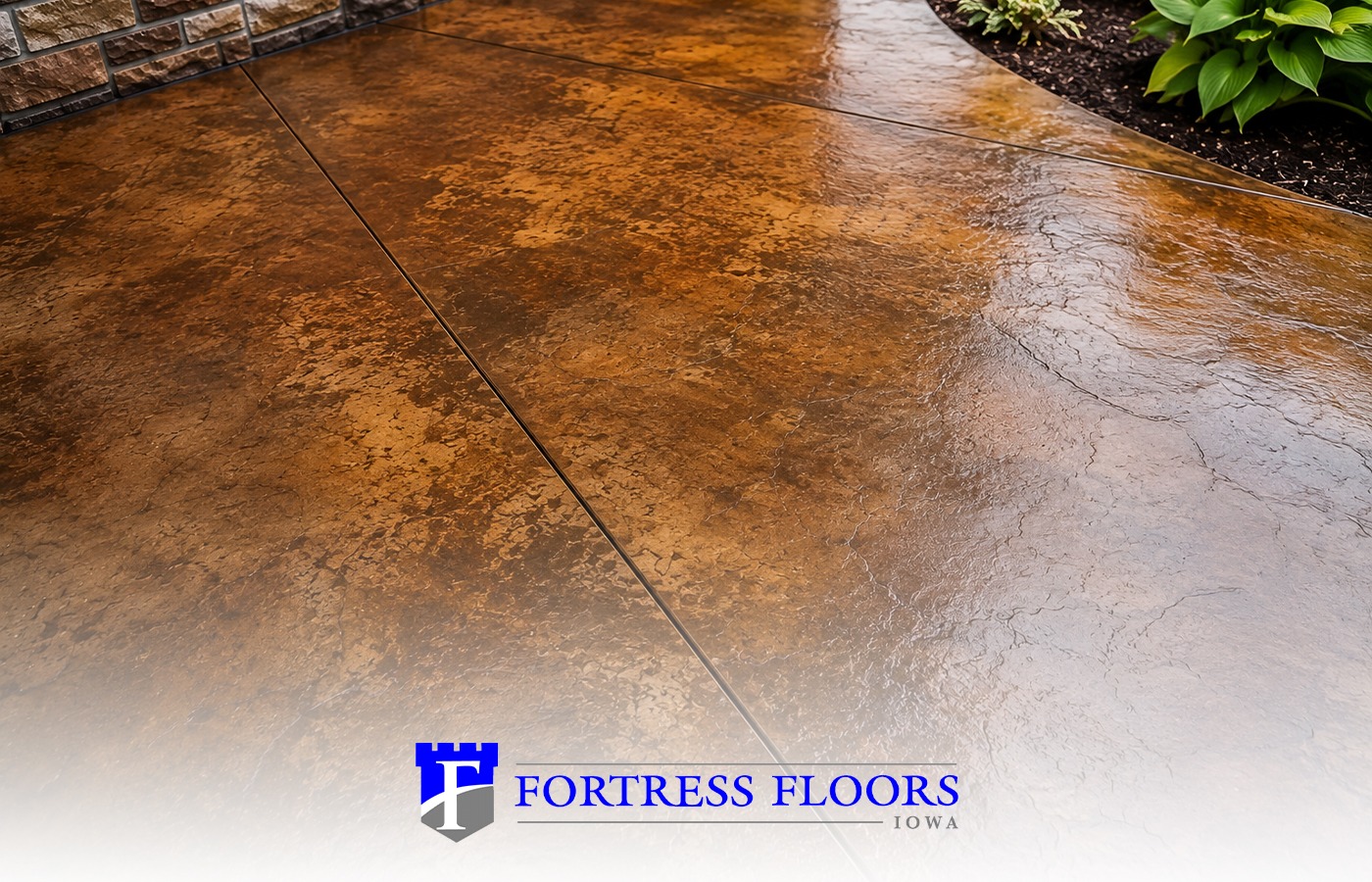
Concrete looks tough, but it’s not doing anyone any favors on its own. It soaks up moisture, salt, and everyday grime, and eventually that turns into fading, pitting, and stains that won’t lift no matter how hard you scrub. Winters here make this worse, since the freeze and thaw cycle puts concrete through a beating every single year. Sealing and staining close off the surface so moisture and salt can’t soak in. That alone slows down most of the wear you’d otherwise see show up year after year. Concrete floor staining also restores rich, lasting color by penetrating the surface instead of simply covering it. It brings some life back into a slab that’s gone dull or gray with age. It’s a simple upgrade, but it changes how a driveway, garage, or patio looks and how long it lasts.
What a Stained and Sealed Floor Actually Gives You
A Finish That Doesn’t Peel
Paint sits on top of concrete, so eventually it chips or peels. Concrete floor staining works differently. The stain soaks into the slab itself, meaning the color becomes part of the concrete instead of sitting on top of it. That’s the whole reason staining outlasts a painted floor by years.A Barrier Against Moisture
The sealer is what keeps water, oil, and salt brine from getting into the concrete in the first place. That’s really where most of the cracking and pitting gets stopped before it starts.Less Time Spent Cleaning
A sealed floor is wiped down with a mop. No scrub brush, elbow grease, or digging dirt out of pores in the concrete.A Better-Looking Property
A stained garage floor or patio changes how the whole space feels. It’s a small thing that ends up making a bigger difference than people expect.Step by Step: From Bare Slab to Finished Floor
Most stain and seal jobs that fail early fail because someone rushed the prep work, but we don’t. Here’s roughly how a job goes:- Surface evaluation. We check moisture levels first, since that shapes which products and approach make sense for the space.
- Grinding or chemical washing. The surface gets ground down or chemically washed to strip off old coatings and anything else that would keep the stain from bonding.
- Crack and repair work. Cracks and rough spots get patched before any color goes down.
- Stain application. The stain goes on, sometimes in more than one coat, until the color has the right depth to it.
- Rinsing and neutralizing. Once the color’s set, the surface gets rinsed so the sealer has a clean base to bond to.
- Sealing. This goes on last, and it’s the step that decides how long the whole job actually lasts.
Signs Your Driveway or Garage Floor Is Overdue
Concrete usually gives you a warning before things get bad. Catching it early beats waiting until a full repair is the only option left.- Fading or dull, gray patches
- Stains that stick around no matter how much you clean
- Small cracks that seem to be spreading
- Dust that keeps coming back after sweeping
- A rough, pitted texture, especially in garages and driveways
Why Installation Matters
How the stain and sealer get applied matters just as much as the products themselves. Skip the prep, and even a good sealer won’t bond properly. We spend time up front on surface prep before any color or sealer goes down. That’s what lets everything applied afterward actually hold. Cut that step short, and you’ll see peeling, fading, or an uneven finish a lot sooner than you’d like.Concrete Sealing and Staining in Decorah, Iowa
Decorah doesn’t do anything halfway when it comes to seasons. Freezing winters and humid summers means concrete takes more of a beating than it would somewhere milder. Fortress Floors of Iowa builds sealing and staining jobs around those conditions instead of treating every floor the same. The goal is a finish that survives the temperature swings without needing constant attention.Basic Maintenance Tips
A sealed and stained floor doesn’t ask for much once it’s done.- Sweep or mop regularly
- Wipe up spills before they sit too long
- Stick to mild, non-abrasive cleaners
- Don’t drag heavy or sharp objects across the surface