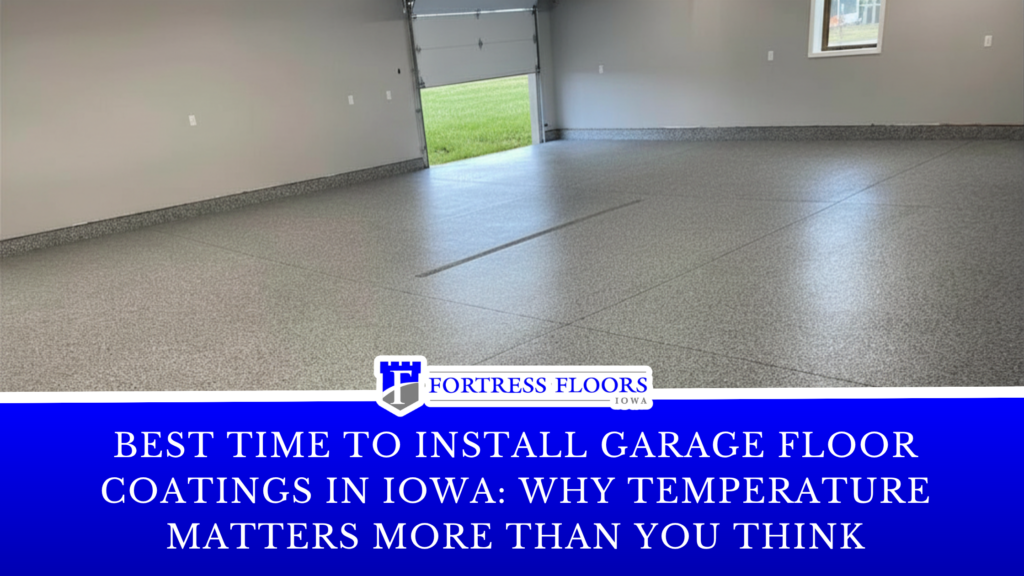
Fortress Floors of Iowa has installed garage floor coatings across Iowa for years, and one question comes up every single week: “When is the best time to get this done?” The honest answer is not a season; it’s the temperature of your concrete slab on the day of installation, and getting that wrong is the single biggest reason a coating fails early.
Here is what actually matters, and why guessing at the timing can cost you a redo.
Why the Calendar Lies to You
A warm, sunny day in Iowa does not guarantee a warm slab. Concrete holds cold from the night before for hours after the air temperature climbs, especially in a garage that never sees direct sunlight. A garage floor coating installer who only checks the weather app before showing up is working off the wrong number.
What actually decides the timing:
- Slab surface temperature, measured with an infrared thermometer, not the air temperature around it.
- Whether the garage is attached or detached, since attached garages hold heat from the house.
- Which direction the garage door faces, since north-facing doors stay colder longer.
- How the space has been used recently, since a garage that parked a warm car overnight holds more residual heat.
What Actually Happens When You Coat a Floor at the Wrong Temperature
Coatings cure through a chemical reaction, and that reaction has a speed limit set by temperature. Apply the material too cold, and the reaction slows down or stalls. Apply it too hot or too humid, especially in Iowa’s sticky July stretch, and the surface can skin over before the layer underneath finishes curing.
Signs of a coating installed at the wrong temperature usually show up months later, not on installation day:
- Peeling near the garage door, where cold air enters most often.
- A cloudy or milky patch where a car tire sat overnight.
- Soft spots that scuff or scratch more easily than the rest of the floor.
- Bubbling across large sections where moisture got trapped underneath.
Homeowners rarely connect these problems back to the installation date. A floor that starts peeling in August often gets blamed on hot tires, when the real cause was a rushed application back in February.
The Temperature Window That Actually Works
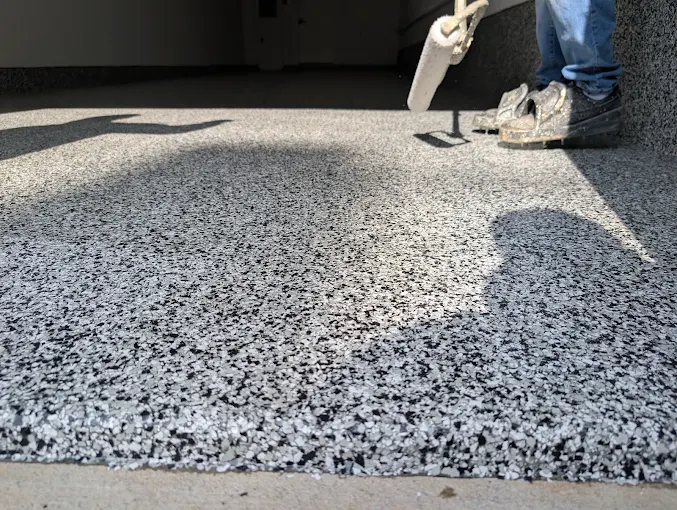
Most quality coatings, polyurea included, perform best inside a fairly specific range:
- Slab temperature between 50 and 90 degrees Fahrenheit.
- Relative humidity low enough that dew is not forming on the concrete.
- Slab temperature at least a few degrees above the dew point.
Polyurea has more flexibility than traditional epoxy, which can struggle to bond below 55 degrees. Even polyurea still needs a dry, reasonably warm slab to perform the way it should.
Cure time shifts with temperature as well. A floor curing around 70 degrees can often handle foot traffic within a day and vehicles within a week. Drop the slab temperature closer to 40 degrees and that same floor may need two or three times as long before it is ready for a car.
Spring and Fall Still Win, and Here Is the Actual Reason
Everyone in this industry says spring and fall are ideal, but few explain why. It comes down to Iowa’s slab temperatures sitting inside that 50 to 90 degree window most consistently during those months.
A few practical reasons spring and fall installations tend to hold up best:
- Slab temperature and humidity stay steady rather than swinging between a damp morning and a muggy afternoon.
- Spring installs finish curing before summer dust and pollen start tracking in on tires.
- Fall installs finish curing before road salt and slush arrive, since salt residue can dull a finish that has not fully hardened.
- Coating companies tend to have lighter schedules in these months, which often means more attention to prep work on your specific job.
A Simple Check Before You Book Anything
If a contractor books your job without asking about insulation, heating, or door direction, that is worth a follow-up question. An unheated, north-facing garage in Cedar Falls in late February behaves nothing like a heated one in Dubuque the same week.
A quick way to check your own garage before calling anyone:
- Walk in during the morning and place a hand flat on the slab for a few seconds.
- Compare how the slab feels against the air temperature in the room.
- Watch for visible breath inside the garage, which signals a cold slab underneath.
- Note whether the garage has been heated or used recently, since that changes how fast it warms up.
If the slab feels noticeably colder than the air or your breath is visible indoors, the floor likely needs extra heating before coating.
How We Handle Iowa Winters Without Making You Wait Until May
Ben Lensing, who owns Fortress Floors of Iowa, spent more than 25 years in construction before ever picking up a coating sprayer, and that background shows in how we schedule jobs. We check both slab temperature and humidity before confirming a date rather than locking in whatever week is open on the calendar.
Here is how we handle a cold-weather request instead of forcing it onto the schedule:
- Check slab temperature and humidity before quoting a firm date.
- Recommend a portable heater running in the garage for a day beforehand, if needed.
- Tell the homeowner honestly if waiting a few weeks will produce a better result.
- Use polyurea rather than epoxy, since it tolerates Iowa’s temperature swings better and cures fast enough for most jobs to be walkable within a single day.
Every installation carries a 15-year guarantee, which only means something if the crew actually accounts for weather before they start spraying.