
Polyurea Garage and Basement Floor Coatings in Independence, Iowa
Concrete Floor Coatings Built for Eastern Iowa Homes
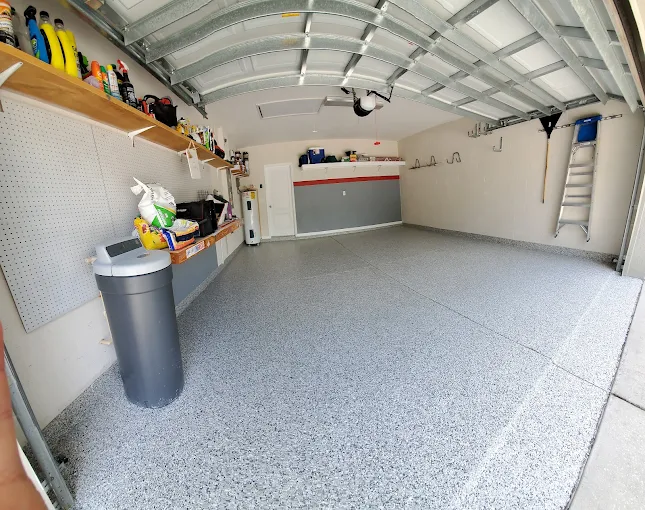
Fortress Floors of Iowa coats garage and basement floors for homeowners in Independence and the rest of Buchanan County. We use polyurea coating systems, and every job starts with grinding the concrete so the coating has something solid to hold onto.
Most people call us after a winter or two. Snow melts off the car, the salt in it dries on the slab, and the concrete near the door starts to pit and flake. The oil spot from the last vehicle never quite comes out either.
A polyurea garage floor coating puts a sealed layer over the concrete, so salt, water, and oil stay on top where you can clean them up. It also makes the garage look a lot better than bare gray concrete.
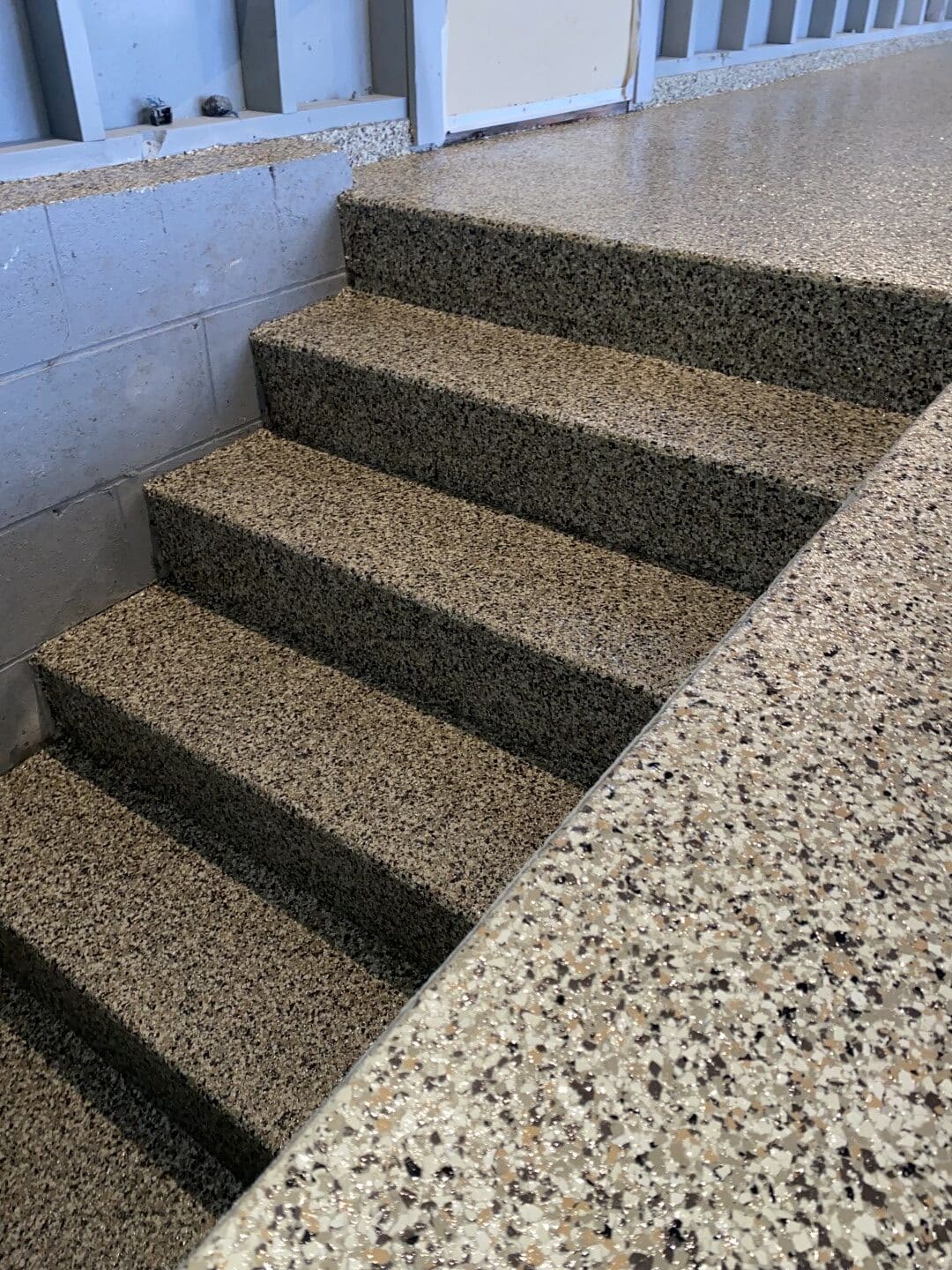
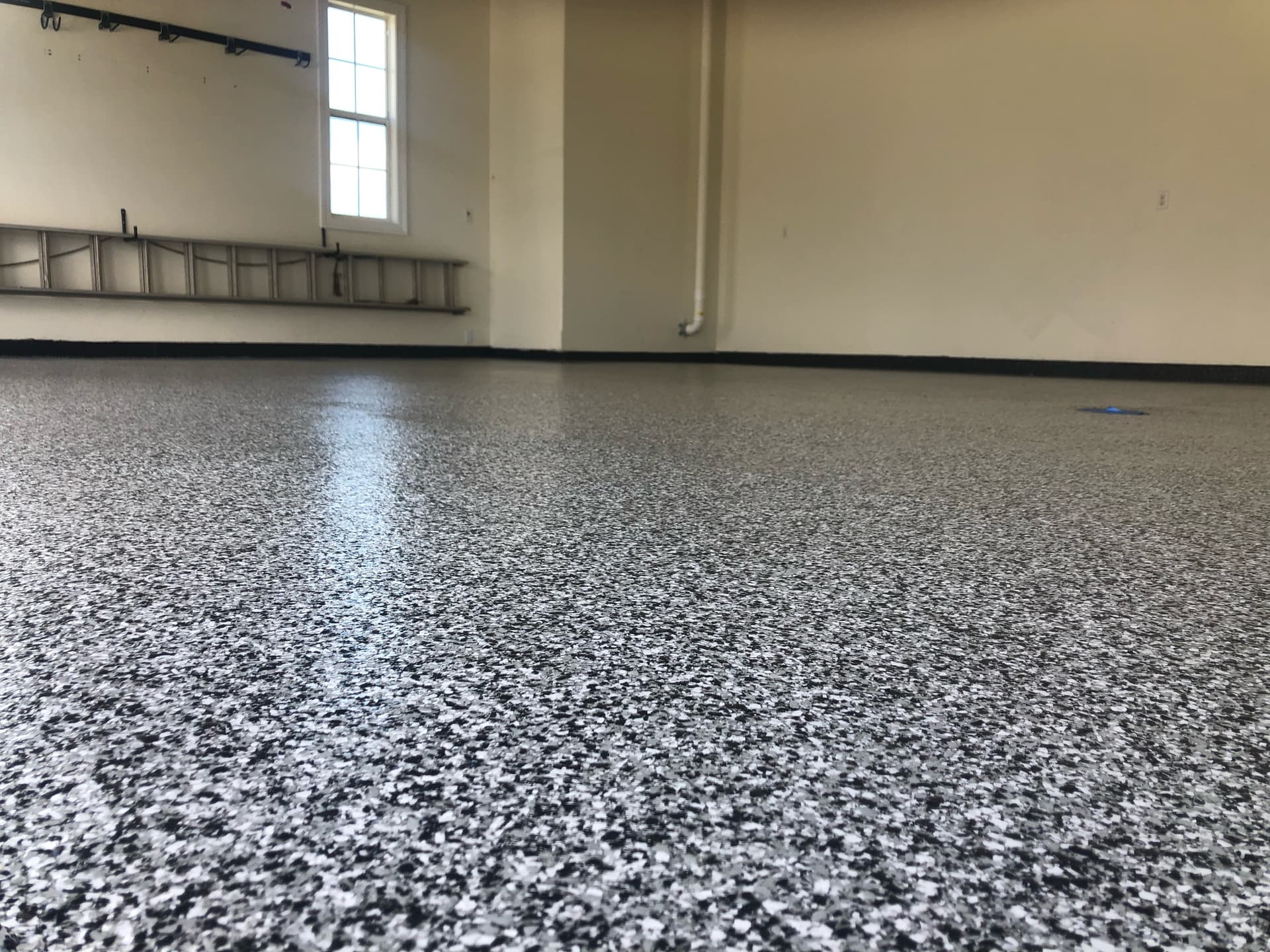
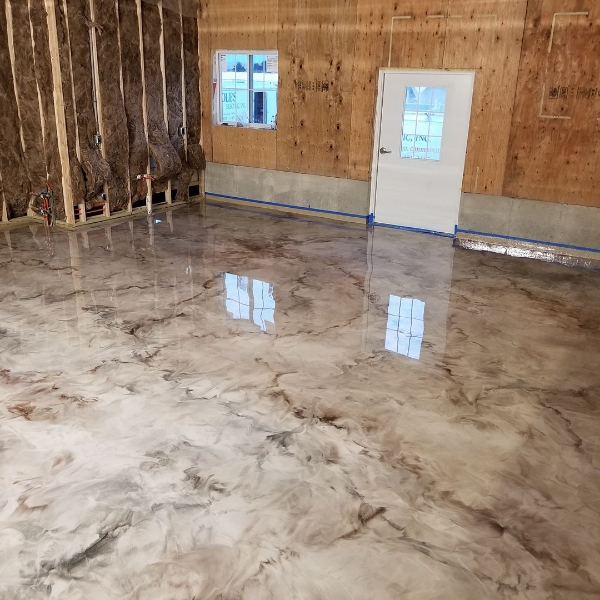
Garage Floor Coating Services for Independence Homeowners
Oil stains, tire marks, salt damage, and dust are the usual complaints. Each one has a fix, and almost every fix starts with how the floor is prepped.
Concrete Surface Preparation
We grind every floor with diamond tooling before any coating goes down. Grinding takes off the weak top layer, old sealer, and anything that would keep the coating from sticking. Cracks, chips, and low spots get filled next, so the base coat goes onto a sound surface.
Protection Against Everyday Garage Wear
Garages take a beating. Cars and trucks park on them, tools get dropped, and fluids leak. Cured polyurea holds up to oil, antifreeze, and road salt, and it won't lift under hot tires the way many paint-on products do.
Easier Floor Maintenance
Keeping a coated floor clean is mostly sweeping. Run a dust mop or leaf blower through it, and mop with mild soap and water when it needs more. Winter slush can be pushed out the door with a squeegee.
A Cleaner, More Finished Appearance
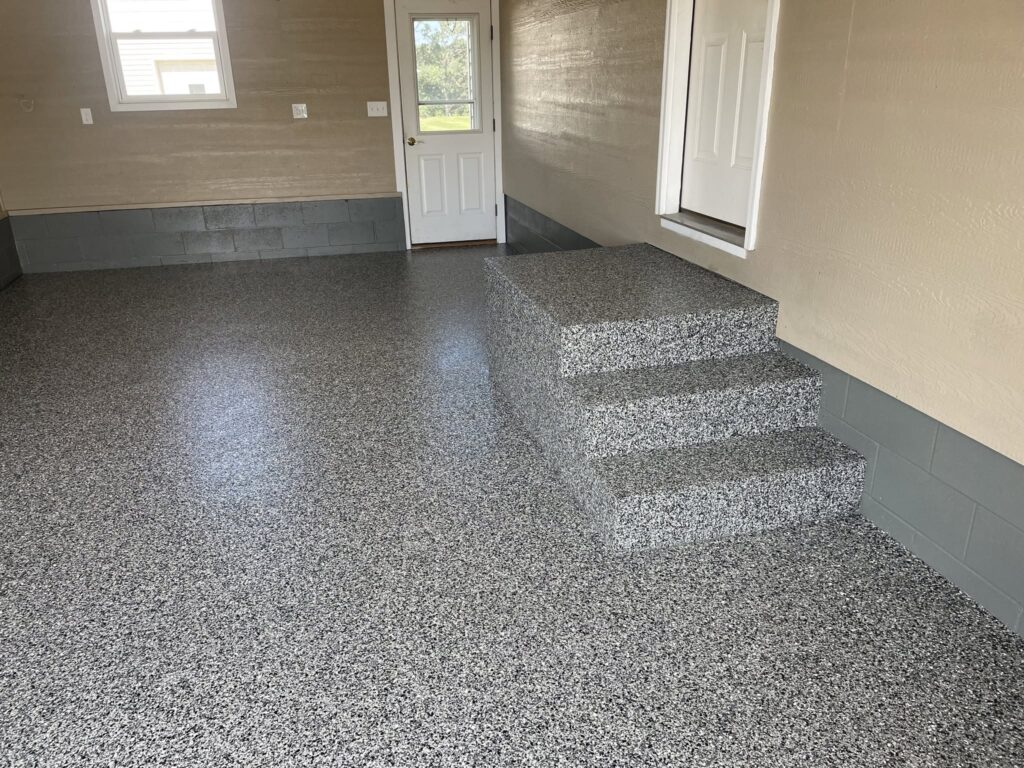
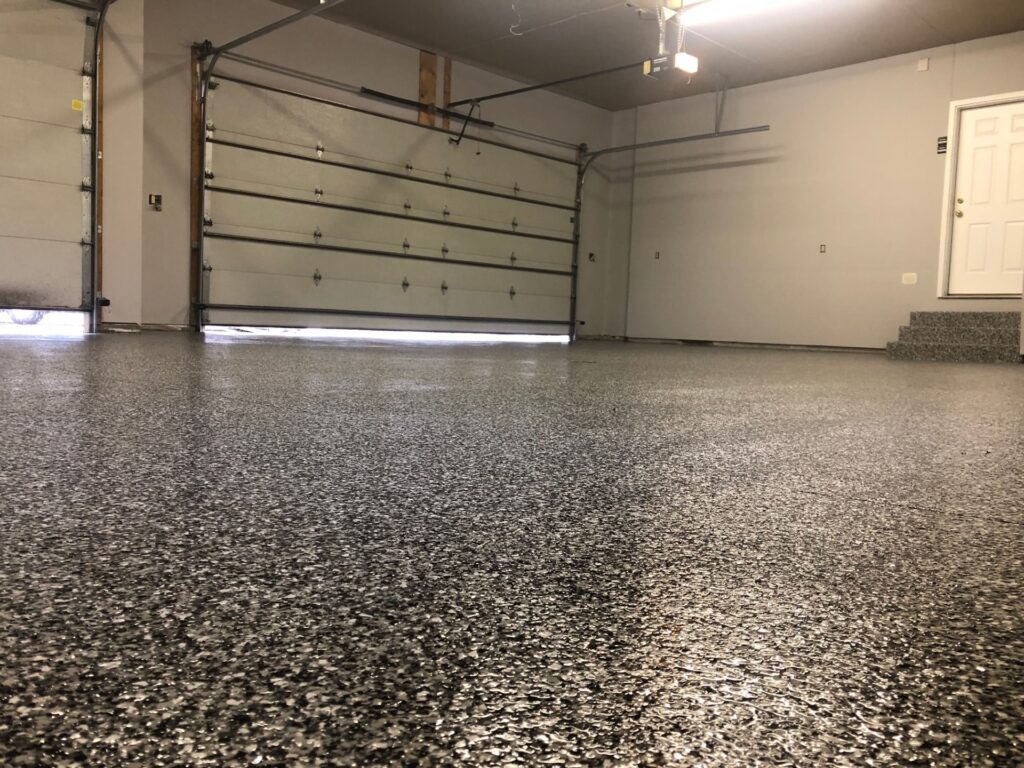
The flakes break up the color of the floor, so small marks and dirt don't stand out the way they do on plain concrete. You can pick a blend that goes with your house on our floor colors page.
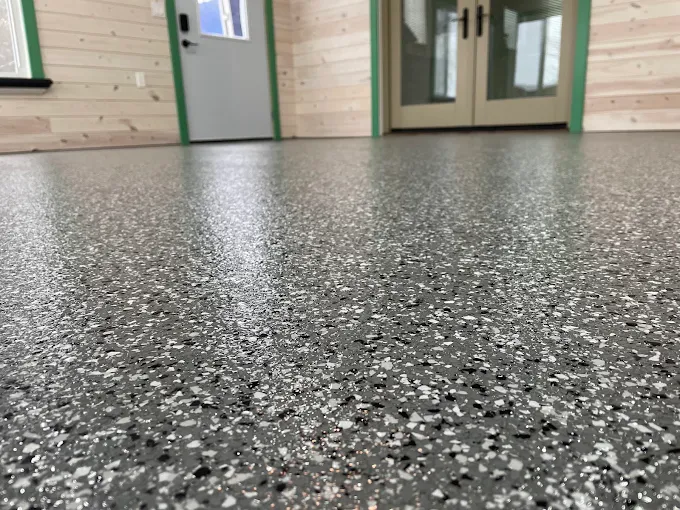
Benefits of Polyurea Garage Floor Coatings
- Oil, fluids, and salt wipe up instead of soaking in
- No seams or grout lines for dirt to collect in
- Flake texture gives better footing than painted concrete
- Stays flexible through hot summers and cold winters
- Cures faster than epoxy, so you get your garage back sooner
- Stops the fine concrete dust that settles on everything.
Fortress Floors Iowa

What Is a Polyurea Garage Floor Coating?
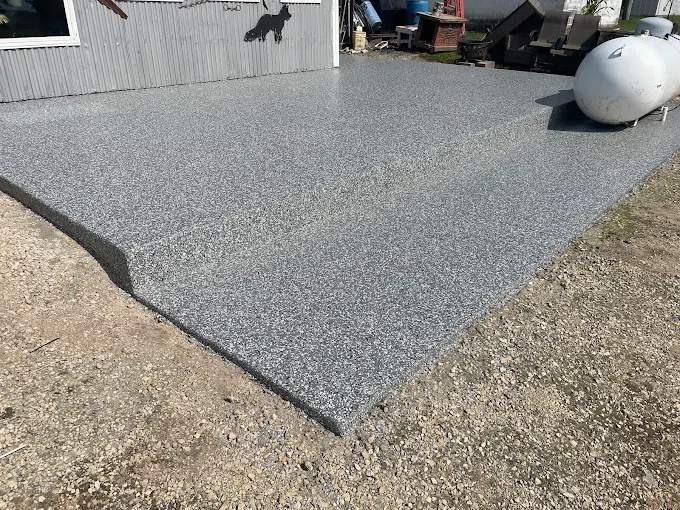
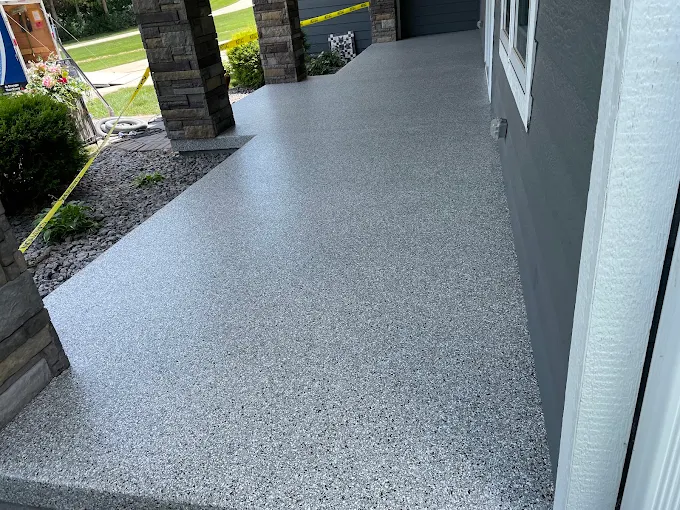
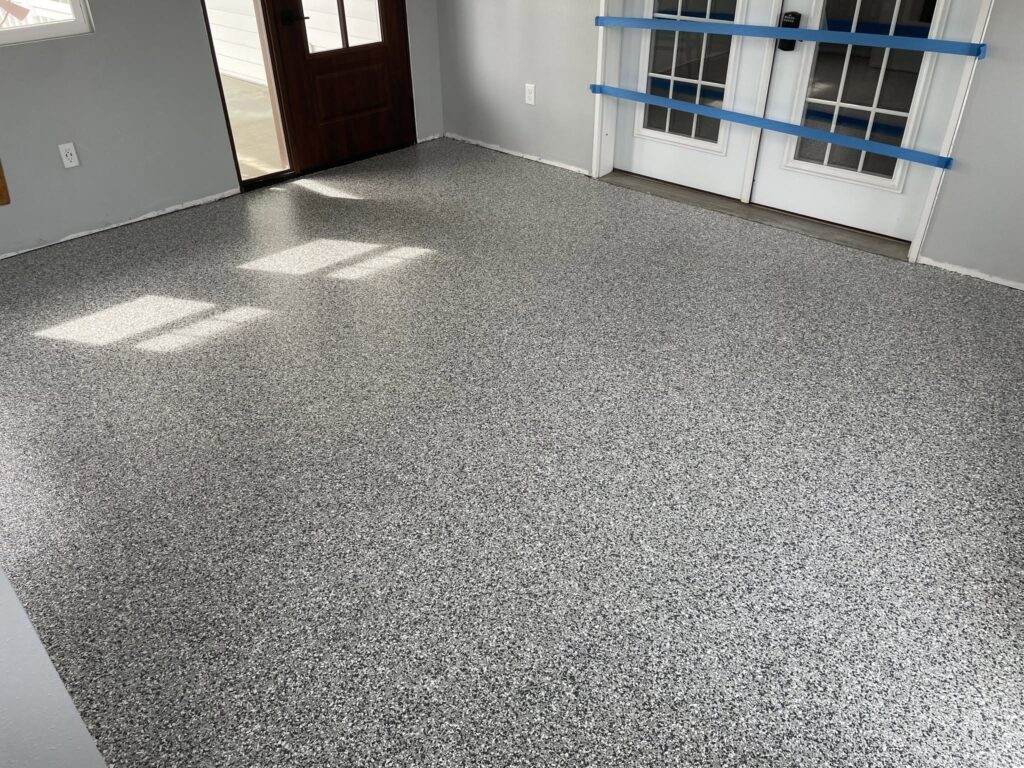
A polyurea garage floor coating is a protective coating system applied over ground concrete. We put down a polyurea base coat, spread color flakes into it while it’s wet, and finish with a clear polyaspartic topcoat. Once it cures, the floor is one continuous surface with no pores for stains to soak into.
Polyurea is the only coating we install. It cures much faster than epoxy, and it stays flexible in the cold instead of getting brittle. Iowa garages go from hot summer afternoons to below-zero winter nights, so that flexibility counts. We wrote more about how polyurea compares to epoxy if you’re weighing the two.
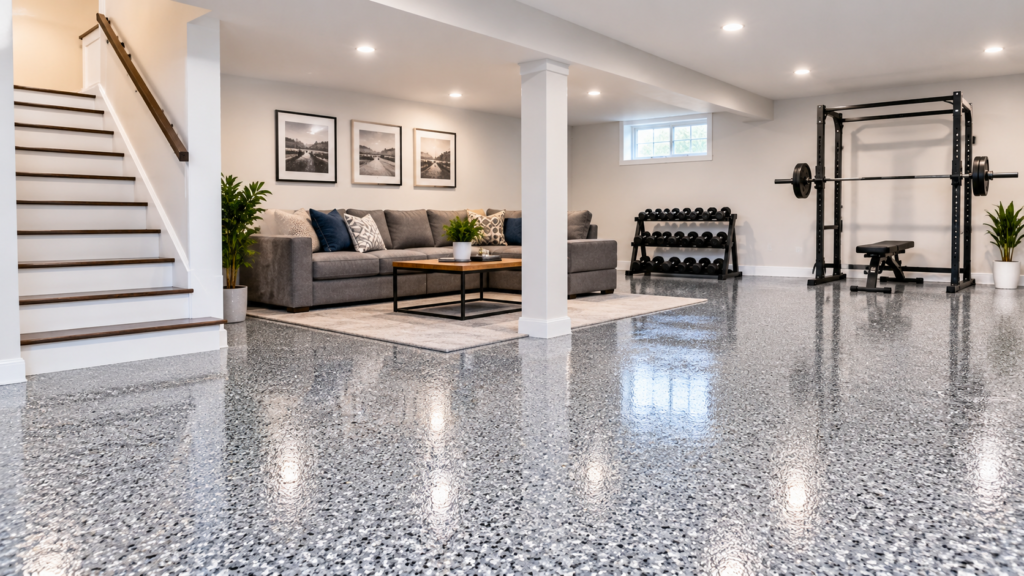
Basement Floor Coatings in Independence
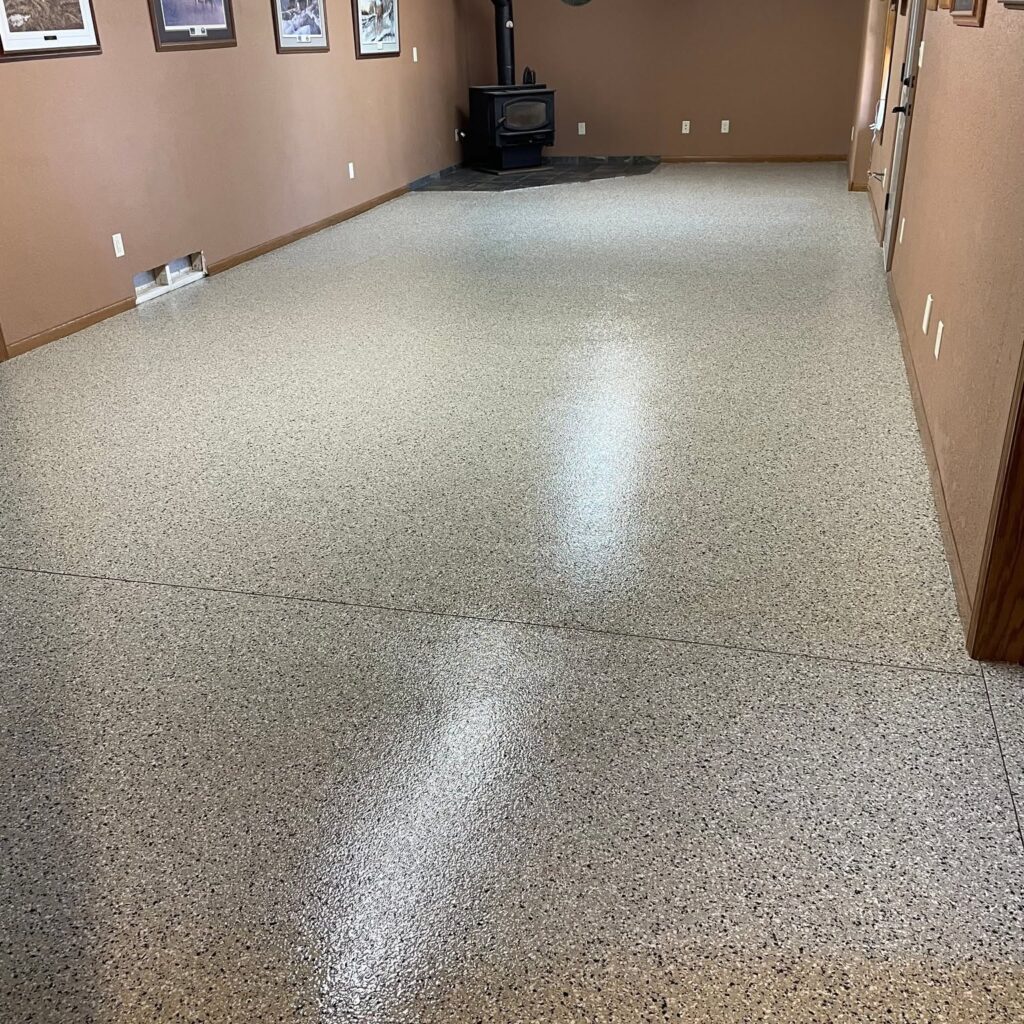
An uncoated basement floor is cold, gray, and dusty, and that dust lands on everything stored down there. A polyurea basement floor coating seals the concrete and makes the room feel finished, usually for less than other flooring options.
We coat basement floors used as:
- Storage and utility rooms
- Laundry rooms
- Home gyms
- Workshops and hobby rooms
- Finished family rooms
A coating can’t stop leaks. Any water coming through the floor or walls has to be fixed first, and we’ll check your slab at the estimate.
How Garage and Basement Coating Needs Differ
We use the same polyurea system in both spaces. What changes is what the floor has to put up with.
| Factor | Garage Floors | Basement Floors |
|---|---|---|
| Main wear | Vehicle weight, hot tires, road salt, oil | Foot traffic, furniture, moisture from below, dust |
| What matters most | Holding up to stains and chemicals | Checking moisture and improving the look of the room |
| Prep work | Grinding out oil, salt residue, and old coatings | Testing moisture and repairing cracks |
| End result | A parking and work area that cleans up quickly | A usable room instead of bare concrete |
Our Concrete Floor Coating Installation Process
Most of the work happens before any coating is applied. A typical job goes like this:
01.
Free estimate.
We come out, measure the floor, check the concrete for damage and moisture, and go over colors with you.
02.
Grinding
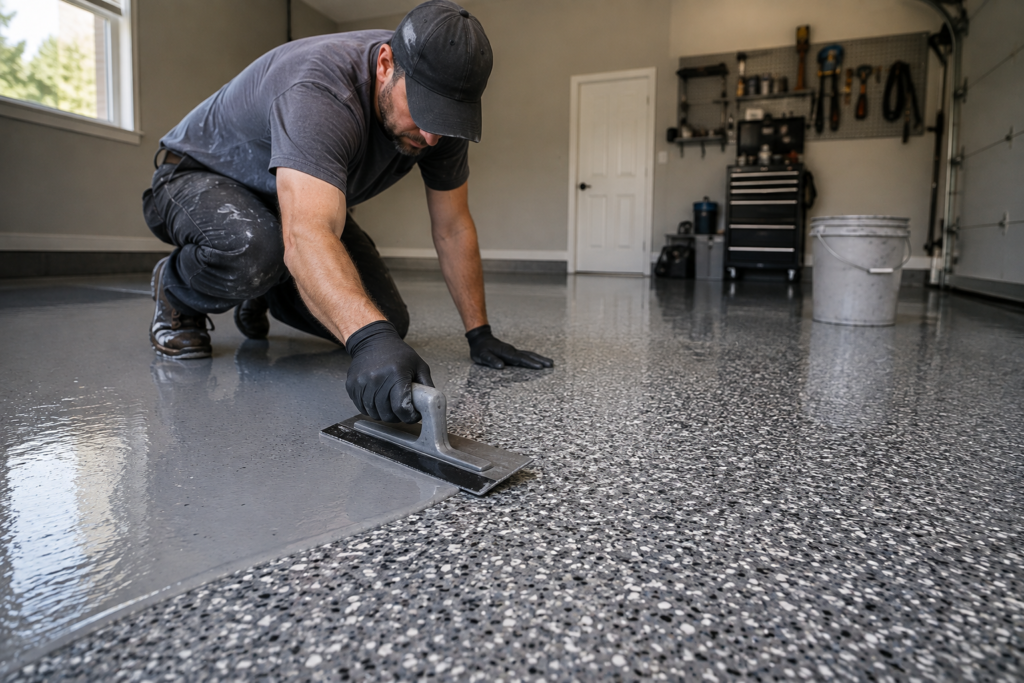
We grind the floor with diamond tooling to clean it and give the coating a rough surface to grip.
03.
Repairs
Cracks, chips, and pits get filled.
04.
Base coat
We roll out the polyurea base coat, which bonds into the concrete.
05.
Flakes
Color flakes go down into the wet base coat.
06.
Topcoat
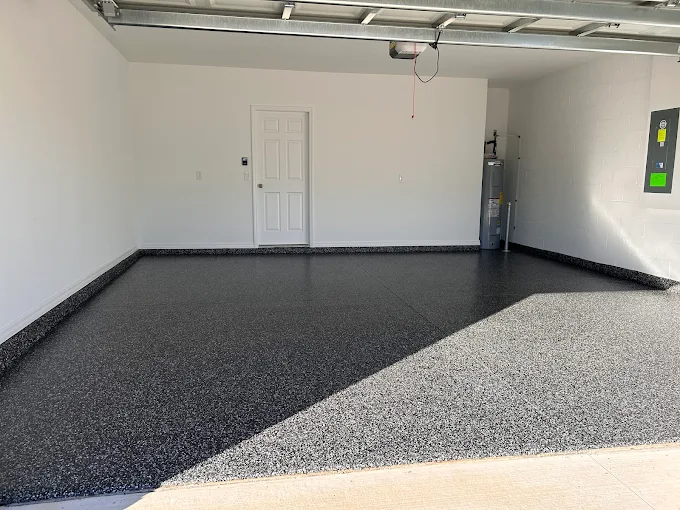
Last comes the clear polyaspartic topcoat, the layer your floor actually deals with every day. It protects against UV fading and seals in everything below it, which is what keeps the whole system performing years down the line.
07.
Back in use
We let you know when it’s safe to walk on and when you can park on it again.
Common Concrete Floor Problems and Practical Solutions
Oil, Fluid, and Tire Stains
Bare concrete soaks up oil. Grinding takes off most of the stained surface, and once the floor is coated, new drips stay on top until you wipe them up.
Dusty, Powdery Concrete
Older concrete wears down at the surface and keeps making dust no matter how often you sweep. Coating the floor seals that surface, and the dust stops.
Cracks, Pitting, and Surface Wear
We fill surface cracks and chips before coating, so the floor looks even when we're done. Cracks from settling or a slab that's still moving can show up again later. If we see that kind of crack, we'll tell you before you agree to anything.
Salt Damage and Spalling
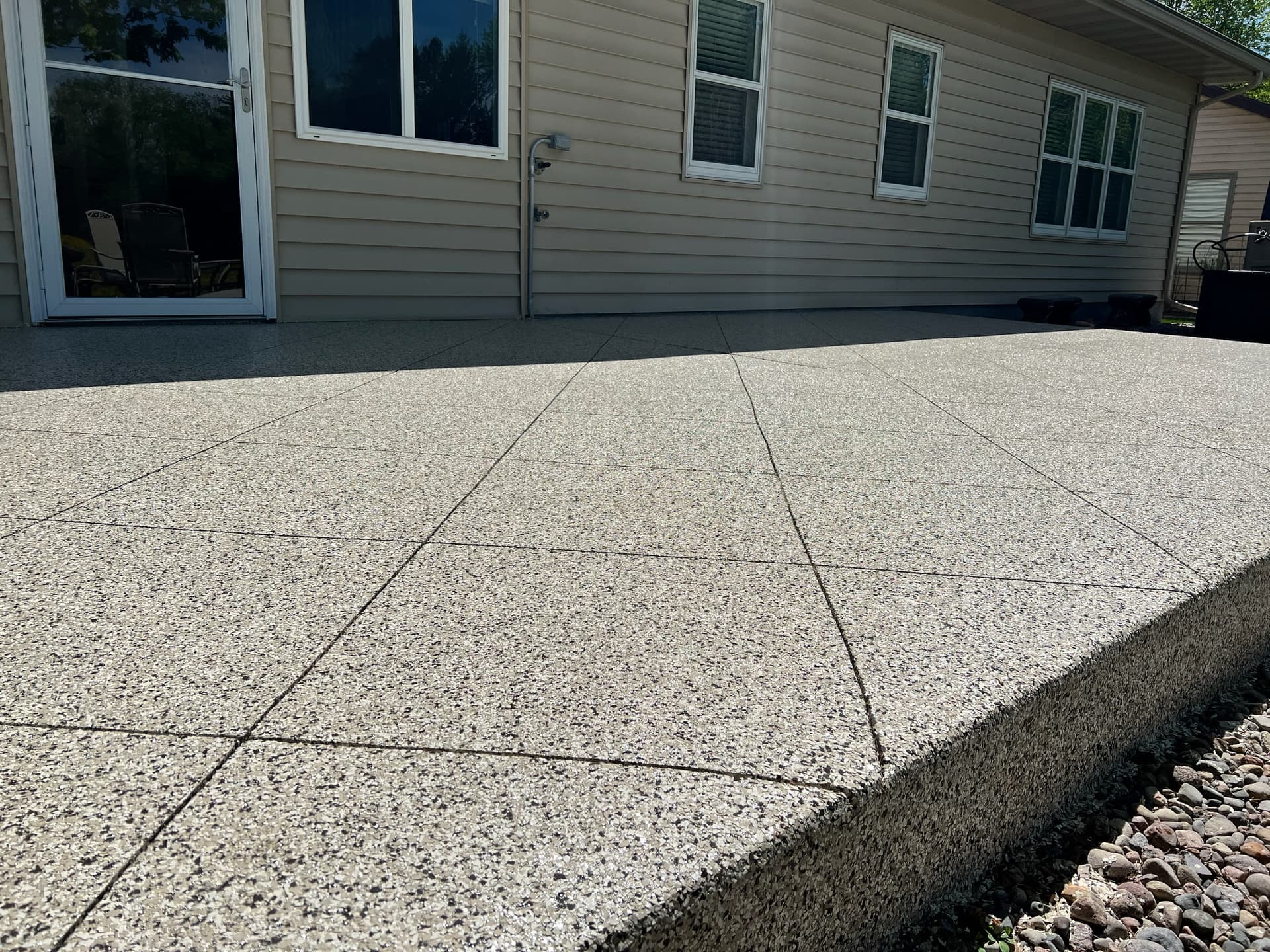
Road salt is hard on garage floors. The brine soaks in, freezes, and slowly breaks the surface apart. A coated floor keeps the brine on top, so you can remove it quickly..
An Outdated or Unfinished Look
Patchy gray concrete can make a garage or basement look neglected, even when the rest of the house is in good shape. A flake floor looks clean and stays that way without much effort.
Professional Floor Coatings vs. DIY Kits
Store-bought kits cost less up front, and it's easy to see why people try them. Most kits have you clean or acid etch the floor instead of grinding it, and the coating itself goes on thin. Hot tires can pull it up, and it often peels wherever it didn't bond well.
We grind the concrete, repair it, and use commercial-grade polyurea and polyaspartic materials. A kit may be fine for a spare room that barely gets used. If you park in the garage all winter, a professional system will hold up much better.
Why Independence Homeowners Choose Fortress Floors of Iowa
Fortress Floors of Iowa is a locally owned concrete coating company in northeast Iowa. Here’s what you can expect from us:
- We install polyurea coating systems only
- We grind every floor rather than acid etching it
- We tell you honestly what shape your concrete is in
- We give free estimates with clear pricing
- We offer financing for qualifying homeowners
Serving Independence and Nearby Eastern Iowa Communities
Independence is the Buchanan County seat, on the Wapsipinicon River along U.S. Highway 20 between Waterloo and Dubuque. We coat garage and basement floors for homeowners in town and the area around it.
Iowa
- Waterloo
- Cedar Falls
- Dubuque
- Decorah
- Waverly
- Independence
- Oelwein
Wisconsin
- La Crosse
- Platteville
- Prairie du Chien
Schedule Your Free Floor Coating
Estimate in Independence
If your garage or basement floor is stained, dusty, or flaking, we can take a look. We’ll check the concrete and give you a price along with our honest recommendation. The estimate is free.
Frequently Asked Questions
Does Fortress Floors of Iowa offer garage floor coatings in Independence, Iowa?
Yes. We install polyurea garage and basement floor coatings in Independence and the rest of Buchanan County. Call (563) 202-8920 to set up a free estimate.
How much does a garage floor coating cost in Independence, IA?
It depends on the size of the garage, the condition of the concrete, how much crack repair it needs, and the flake color you pick. We give free on-site estimates, so you get a real number for your floor instead of a rough guess.
How long does a polyurea garage floor coating take to install?
Most home garages take one to two days, depending on size and repair work. We’ll tell you at the estimate when you can walk on it and when you can park on it.
Is polyurea better than epoxy for a garage floor in Iowa?
For most Iowa garages, yes. Polyurea stays flexible in cold weather, cures faster, and holds up to hot tires. Epoxy gets brittle in the cold and can crack or peel as the slab moves.
Can you coat a basement floor that gets damp?
Sometimes. A little dampness can often be handled with the right prep, but leaks or standing water have to be fixed first. A floor coating isn’t waterproofing, so we check for moisture during the estimate.
Will a floor coating hide cracks in my concrete?
We fill surface cracks and chips before coating, and the flakes help the floor look even. Cracks from settling or a slab that’s still moving can come back, and we’ll point those out before we start.
Is a coated garage floor slippery when wet?
The flakes give the floor some texture, so it grips better than painted concrete. Any floor gets slicker with water or snowmelt on it, so it’s worth squeegeeing puddles in winter.
How do I clean a polyurea-coated floor?
Sweep or dust mop it regularly. When it needs more, mop with mild soap and water. Spills wipe right up because nothing soaks in.
What finish and color options are available?
We offer a range of flake color blends. Some people match the house, and others pick a blend that hides dirt well. You can see them on our floor colors page.