
Garage Floor Coating & Concrete Flooring in Decorah, Iowa
High-Performance Garage Floor Coating
Decorah winters aren’t gentle on concrete. Snow gets tracked in on tires and boots, road salt sits on the slab for weeks, and the freeze-thaw cycle keeps working away at whatever cracks it can find. Bare concrete just doesn’t hold up well against that. Fortress Floors of Iowa installs polyurea garage floor coatings for Decorah homeowners who’d rather have a floor built for the season than one that looks good for a year and then starts falling apart.
What Is a Polyurea Garage Floor Coating?
A polyurea garage floor coating is a durable, flexible resurfacing system applied over properly prepared concrete to protect it from moisture, salt, stains, and cracking. Unlike epoxy, it cures in hours instead of days and doesn’t get brittle in cold weather.
Why Decorah Homeowners Choose Fortress Floors of Iowa
There’s no real trick to what we do. Prep the concrete right, pick the right coating for this climate, and don’t rush the job just to get to the next one.
We Use Polyurea Because Epoxy Doesn't Hold Up Here
People sometimes think we skip epoxy to push something fancier. That's not it at all. Epoxy takes a couple of days to cure and gets brittle once temperatures drop, so when the slab shifts even slightly in the cold, the coating cracks or lifts at the seams. Polyurea cures in hours, not days, and keeps its flexibility no matter how far the mercury swings, which matters in a place where the temperature can drop forty degrees between afternoon and midnight.
Garage Floors See More Abuse Than People Think
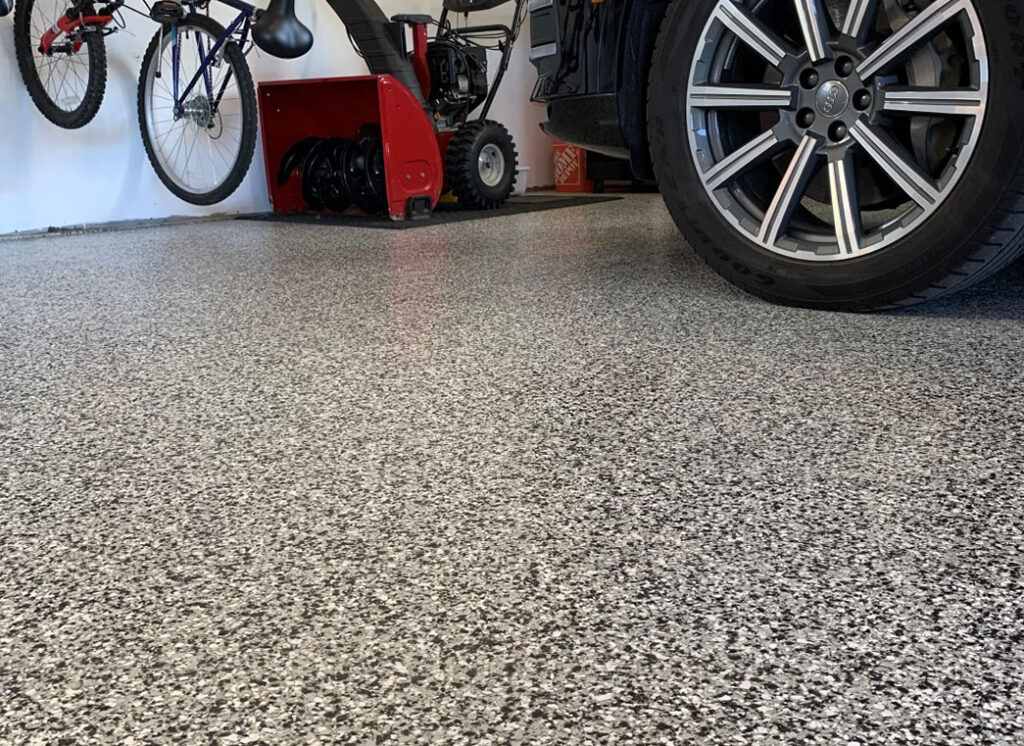
Oil drips, road salt, dropped tools, and the sheer weight of vehicles rolling in and out day after day adds up faster than most homeowners notice until the concrete starts showing it. Whatever goes down on that floor needs to handle real everyday wear, not the light-duty version a showroom sample might suggest.
Less Scrubbing, Better Looking Floor
Bare concrete soaks up stains and starts looking tired within a couple years no matter how careful you are with it. Once a floor's coated, cleanup is mostly a quick sweep or a wipe-down, and it holds its color and finish a lot longer without you having to babysit it.
Preparation Is Where the Job Gets Won or Lost
Ask around and you'll hear the same story. Coatings that fail early almost always failed because the concrete wasn't prepped properly beforehand. We grind the surface, patch cracks, and clean everything thoroughly before a drop of product goes down. It's not the part of the job anyone gets excited about, but it's the part that decides whether the floor lasts ten years or two.
What a Coated Garage Floor Actually Gives You
- Keeps moisture, salt, and stains from soaking into the concrete
- Leaves a seamless surface that’s easy to sweep or wipe clean
- Comes with slip-resistant finish options for better traction
- Resists the peeling and cracking plain concrete deals with over time
- Gives the garage a cleaner, more finished look overall
Fortress Floors Iowa

What Goes Into Installing Your Garage Floor Coating
We get asked fairly often why so much time goes into prepping the floor before the coating even touches it. The short answer is bond strength. Skip the prep and the coating might look fine for a season, but it usually starts failing in patches once real wear sets in.
Here’s our process:
01.
Concrete Assessment
We walk the entire floor first, checking for cracks, soft or pitted areas, and any sign that moisture is working its way up through the slab. What we find here shapes how the rest of the job gets handled.
02.
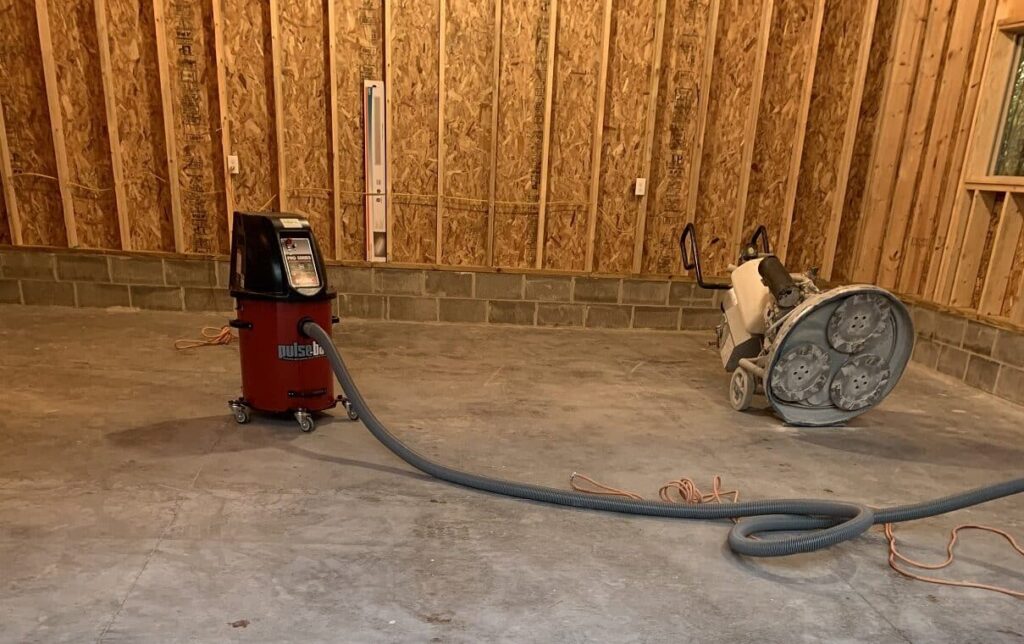
Diamond Grinding the Surface
The whole floor gets ground with diamond equipment to open up the concrete and create a texture the coating can actually grip. This step gets left out of a lot of budget installs, and it’s usually why those coatings don’t last.
03.
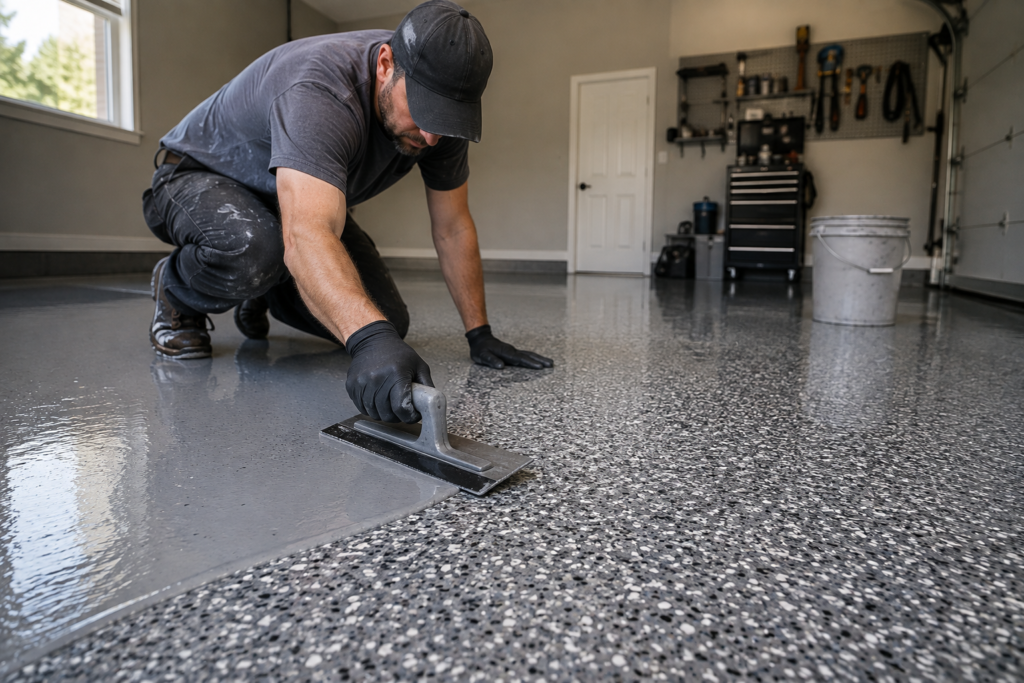
Crack and Surface Repairs
Cracks, pits, and rough patches get repaired before we move any further. Coating over a problem area doesn’t solve anything, it just hides it until the coating fails there first.
04.
Polyurea Base Coat
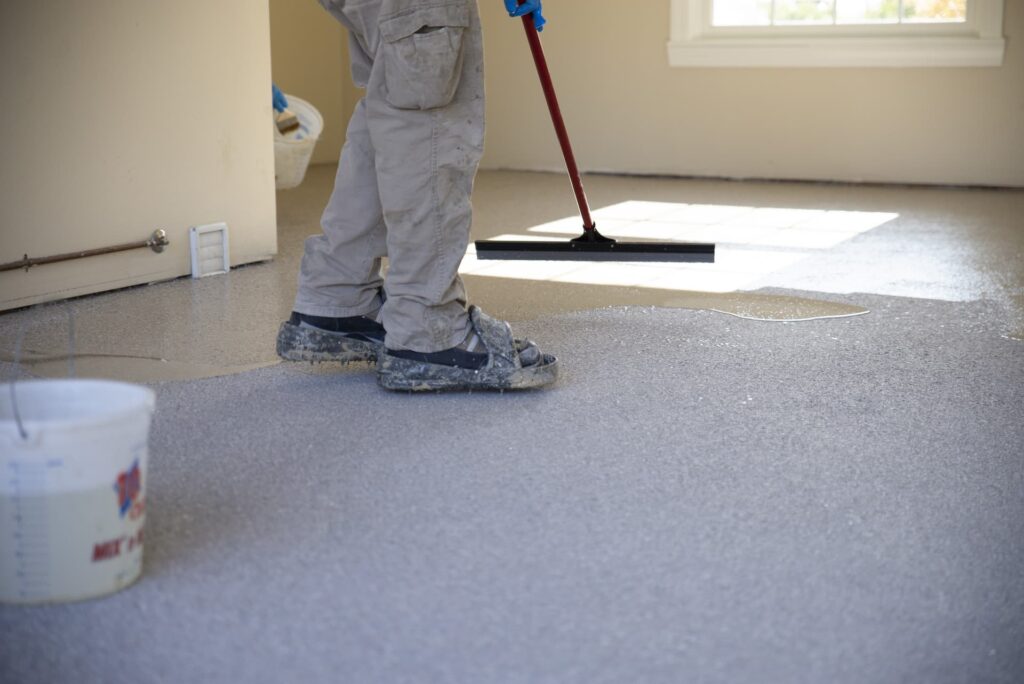
With the surface ready, the polyurea base coat goes down next. It bonds into the concrete itself and becomes the foundation everything else is built on, which is where most of the system’s strength and moisture resistance comes from.
05.
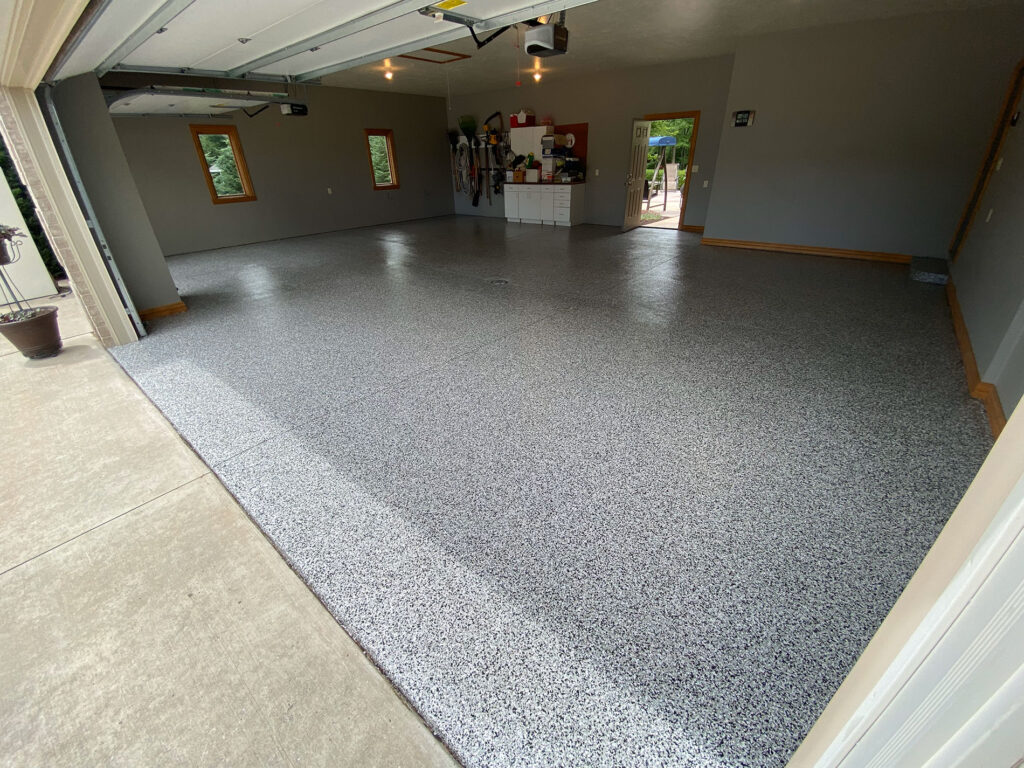
Color Flake Broadcast
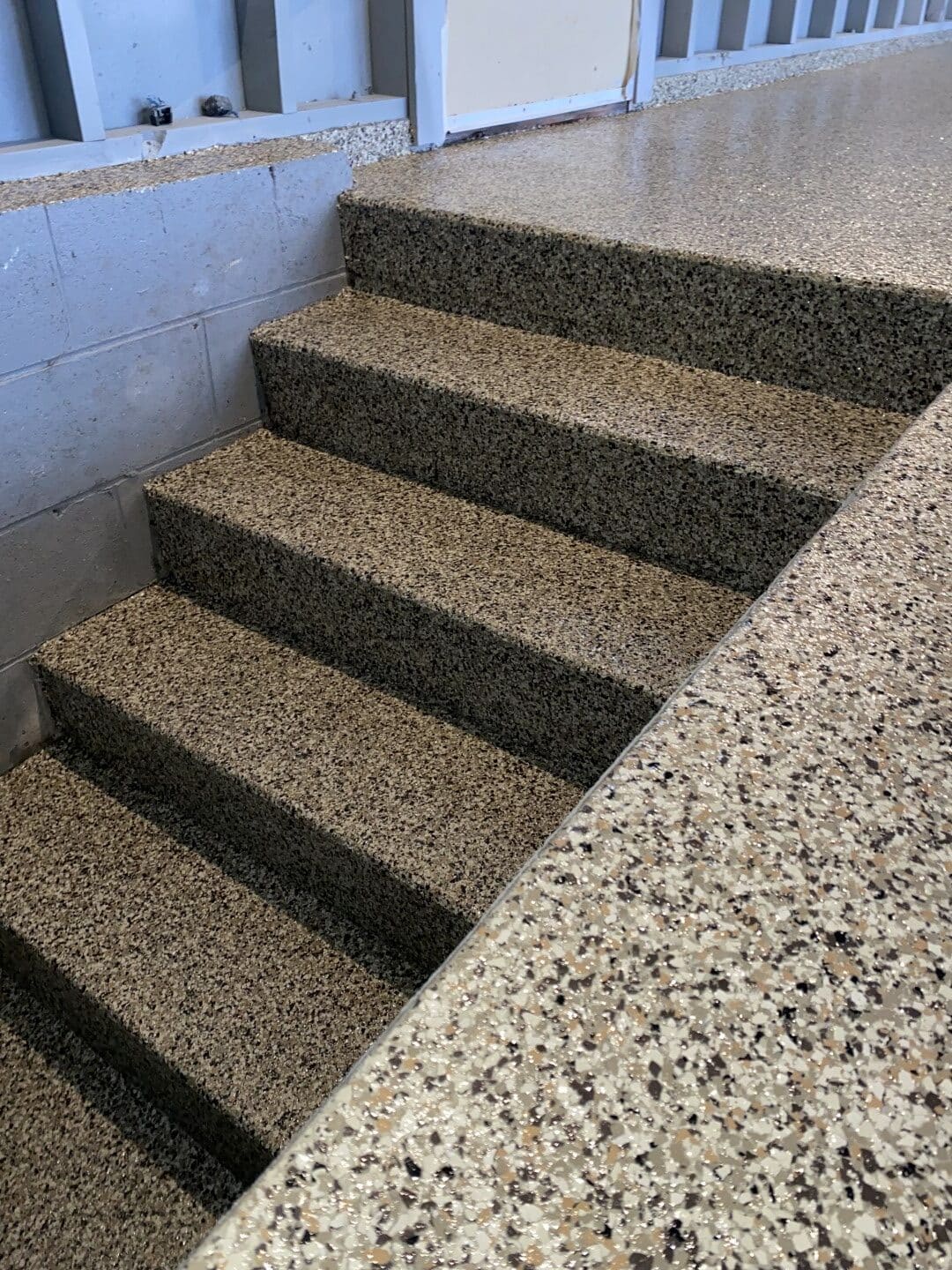
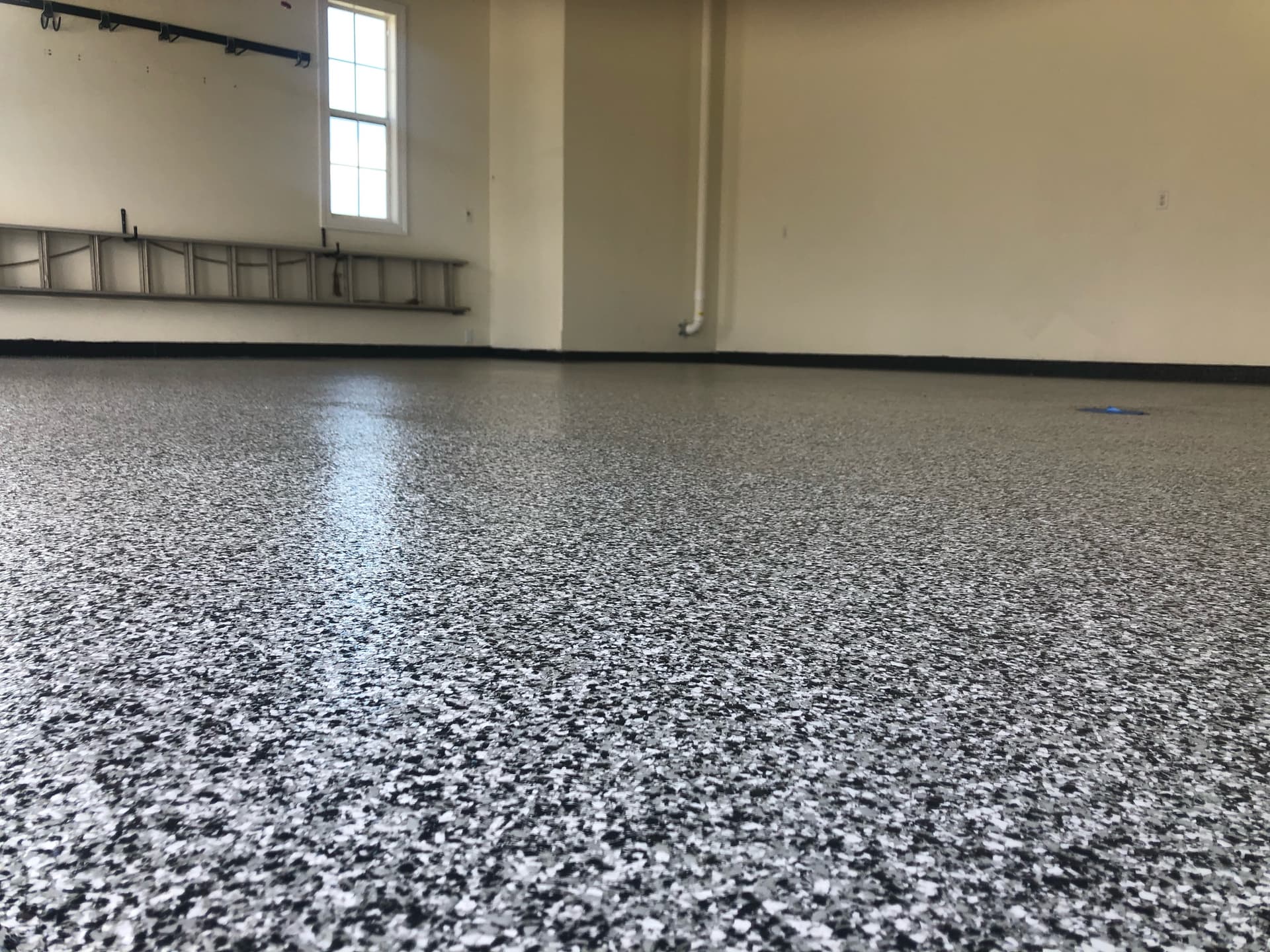
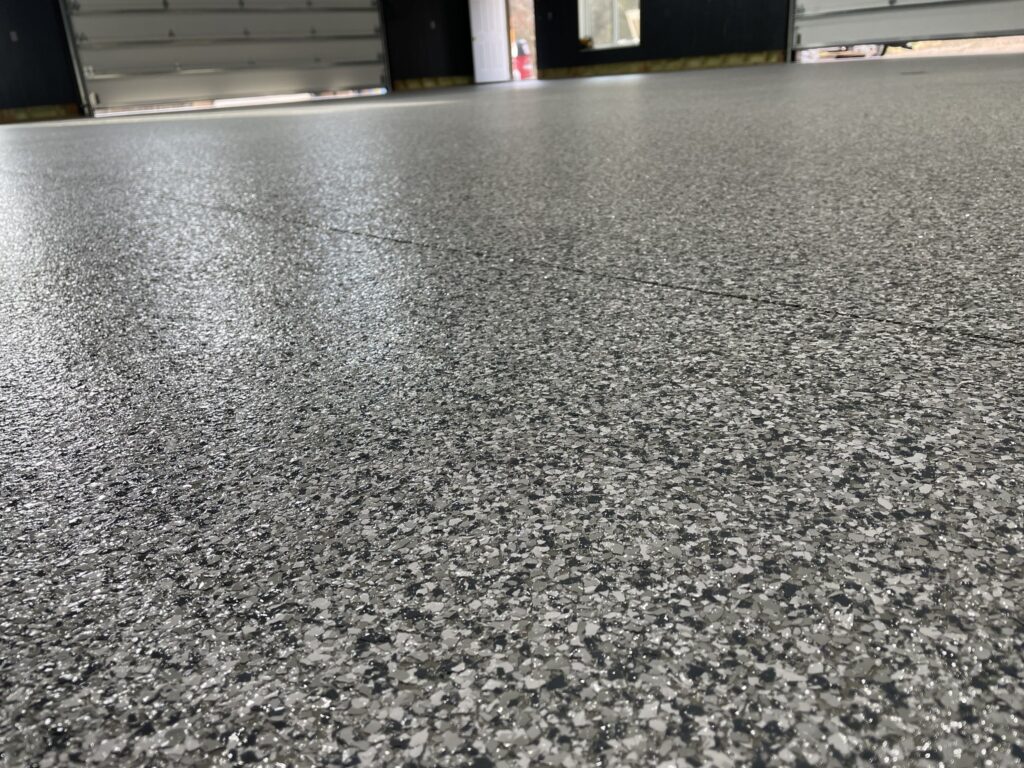
For anyone who wants more than a plain solid finish, we scatter decorative color flakes into the wet base coat. Beyond the look, they add a bit of texture and grip underfoot. There are a handful of blends to pick from depending on the style you’re after.
06.
Clear Polyaspartic Topcoat
Last comes the clear polyaspartic topcoat, the layer your floor actually deals with every day. It protects against UV fading and seals in everything below it, which is what keeps the whole system performing years down the line.
Other Concrete Surfaces We Take Care Of
Garages are the bulk of our work, but plenty of Decorah properties have other concrete that could use the same kind of protection.
Basement Floor Coatings
Basements fight a different battle than garages, mostly from humidity and moisture pushing up from below the slab. A properly installed basement floor coating seals against that and makes the room a lot more usable, whether it's finished living space or just a utility area you'd rather not deal with.
Patio and Outdoor Concrete Coatings
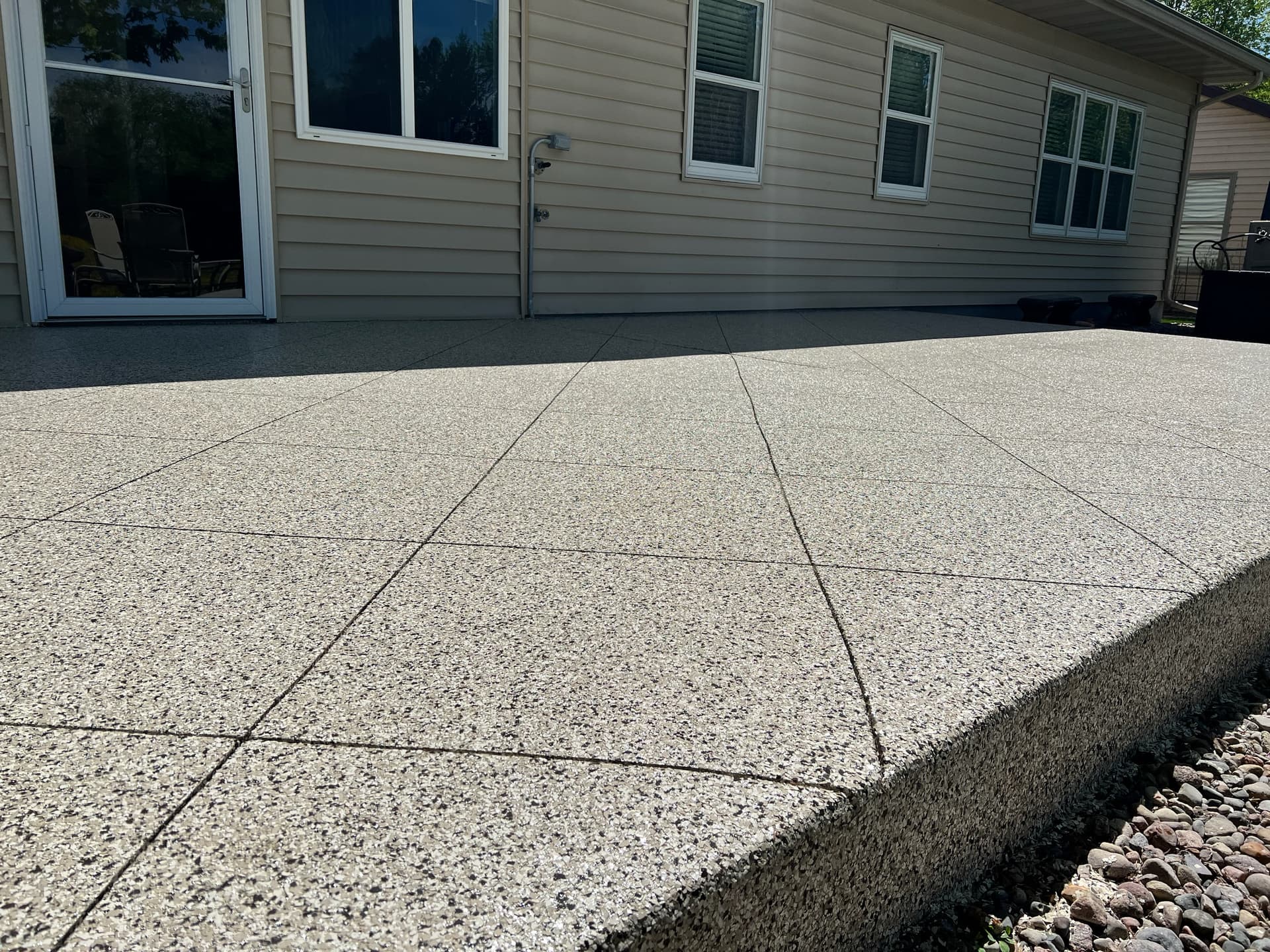
Sun exposure, rain, ice, and repeated freeze-thaw cycles chip away at outdoor concrete year after year. We coat patios, porches, and other outdoor slabs with systems built for that kind of exposure, and they improve footing when things get wet or icy out there too.
Shed and Utility Space Coatings
A coated floor in a shed or workshop keeps moisture out and makes the whole space easier to clean and actually work in. We use the same systems we use in garages so the protection level doesn't change just because the building is smaller.
Concrete Staining and Sealing
Staining brings color into a space without hiding the natural texture of the concrete, and it tends to work best indoors where the look matters as much as the protection. Sealing is a lighter-touch option that guards against water, salt, and general wear without changing the concrete's appearance much, and it's a common pick for driveways and sidewalks where a full coating isn't really necessary.
Polished Concrete Floors
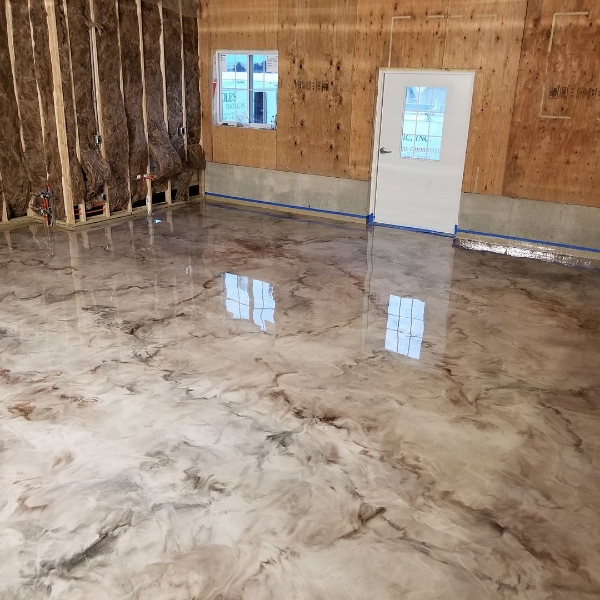
Polishing refines the surface through a series of grinding passes, leaving the concrete smooth, reflective, and low-maintenance. It works well in areas that see steady foot traffic but still need to look sharp.
How Decorah's Climate Shapes Our Approach to Coatings
Concrete here takes a beating from November through March. The ground freezes and thaws over and over as the season drags on, salt gets tracked into garages on every vehicle, and moisture finds its way into any crack that isn’t sealed. Given enough time, that combination leads to spalling and surface breakdown, and once concrete starts going, it tends to go faster than most homeowners expect. We build our polyurea systems with all of that in mind. The coating needs to stay bonded through the cold snaps, flex with the slab as it moves, and shed the salt and moisture that cause most of the long-term damage, and that’s exactly what our coating is designed to do.
Where We Work Near Decorah
Fortress Floors of Iowa installs concrete and garage floor coatings for homeowners and property owners across eastern Iowa, including Decorah and the surrounding communities. If you’re just outside town and aren’t sure whether we cover your location, give us a call and we’ll let you know.
Iowa
- Waterloo
- Cedar Falls
- Dubuque
- Decorah
- Waverly
- Independence
- Oelwein
Wisconsin
- La Crosse
- Platteville
- Prairie du Chien
Ready to Talk About Your
Decorah Concrete Floor?
If a garage floor coating has been on your list, or you’ve got a basement, patio, or other concrete surface that needs some attention, reach out and we’ll come take a look in person. We’ll walk the space, talk through what actually makes sense for it, and put together a clear estimate with no pressure to move forward right away.
Frequently Asked Questions
How does Decorah's weather affect a garage floor coating?
Decorah gets real extremes, hot summers, cold winters, and a lot of freeze-thaw activity in between. That’s a big part of why we use polyurea instead of epoxy in the first place. Epoxy turns brittle in the cold and tends to crack once the slab shifts underneath it, while polyurea keeps its flexibility through those swings, so the coating stays intact season after season instead of lifting or peeling.
Is polyurea actually a good match for a garage floor?
It is, and honestly that’s the whole reason we built the business around it. Garage floors deal with vehicle weight, fluid drips, and salt tracked in off the road all winter long, and polyurea is made to handle exactly that kind of punishment without breaking down. It also cures in a matter of hours instead of days, so you’re not stuck keeping vehicles out of the garage for very long.
What other surfaces can you coat besides garages?
Basements, patios, porches, sheds, and most other concrete around a home or light commercial building. If there’s a space you’re unsure about, just ask. We’ll take a look and give you an honest answer on whether it’s a good candidate.
Walk me through what the installation actually involves.
We start by assessing the concrete for cracks or moisture problems, then grind the surface so the coating has something to bond to. From there we repair any damaged spots, apply the polyurea base coat, add decorative flakes if you’d like them, and finish everything off with a clear polyaspartic topcoat.
What determines the cost of a garage floor coating in Decorah?
Pricing depends on the size of the space, the condition of the existing concrete, and whether you choose a solid color or a decorative flake finish. The best way to get an accurate number is a free in-person estimate, since every garage and basement is a little different.
How long does a garage floor coating take to install?
Most garage floor coatings take one to two days from start to finish, depending on the size of the space and whether repairs are needed first. Because polyurea cures in hours rather than days, you’re not left waiting around after installation the way you would be with epoxy.