“A polyurea garage floor coating is a fast-curing, flexible coating that seals concrete against water, road salt, and stains. Iowa homeowners are choosing it over epoxy because it handles freeze-thaw cycles without peeling, resists yellowing, and usually goes down in one day.”
Walk into almost any Iowa garage in February, and you’ll see the same thing. Gray slush drips off the tires, spreads across the floor, and dries into a white salt ring. Repeat that for a few winters, and the concrete starts to pit, flake, and crack.
That’s a big reason a polyurea garage floor coating has gone from a commercial product to something homeowners in Decorah, Waterloo, and Dubuque now ask for by name. It’s tougher than epoxy, it cures in hours, and it doesn’t mind an Iowa winter.
Our crew at Fortress Floors of Iowa installs polyurea floors across Northeast Iowa and Southwest Wisconsin. Below, we’ll explain what polyurea is, why it holds up here, what it costs to own, and the questions homeowners ask us most.
What Is Polyurea, and How Does It Work on a Garage Floor?
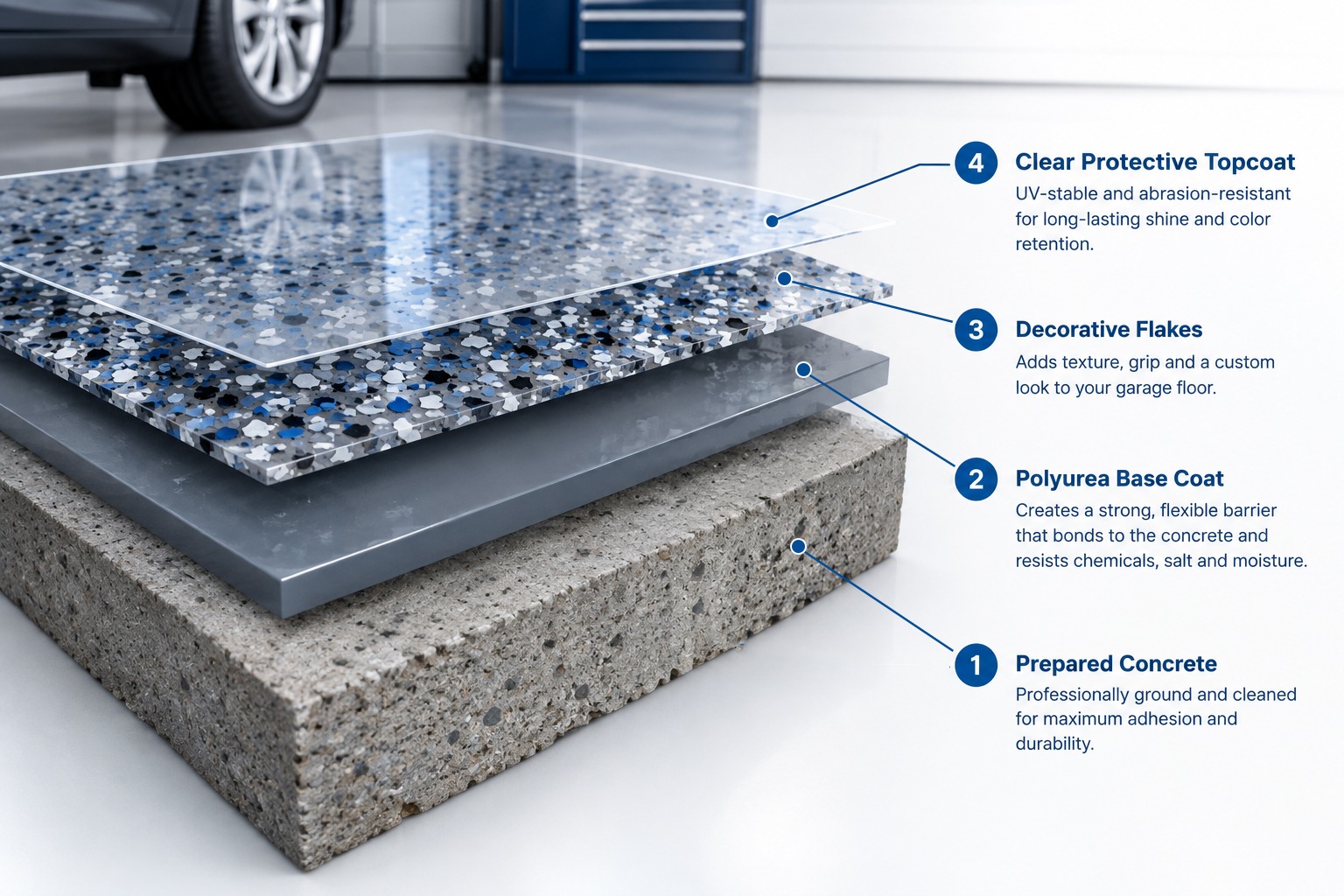
Polyurea is a two-part coating that reacts and hardens within minutes once it’s mixed. Applied to properly ground concrete, it forms a seamless, flexible shell that water and salt can’t soak through.
You’ve probably touched polyurea without knowing it. Spray-on truck bed liners use the same chemistry, and so do tank linings and bridge decks that take a beating every day. The residential version keeps that toughness and adds a finish you’d actually want to look at.
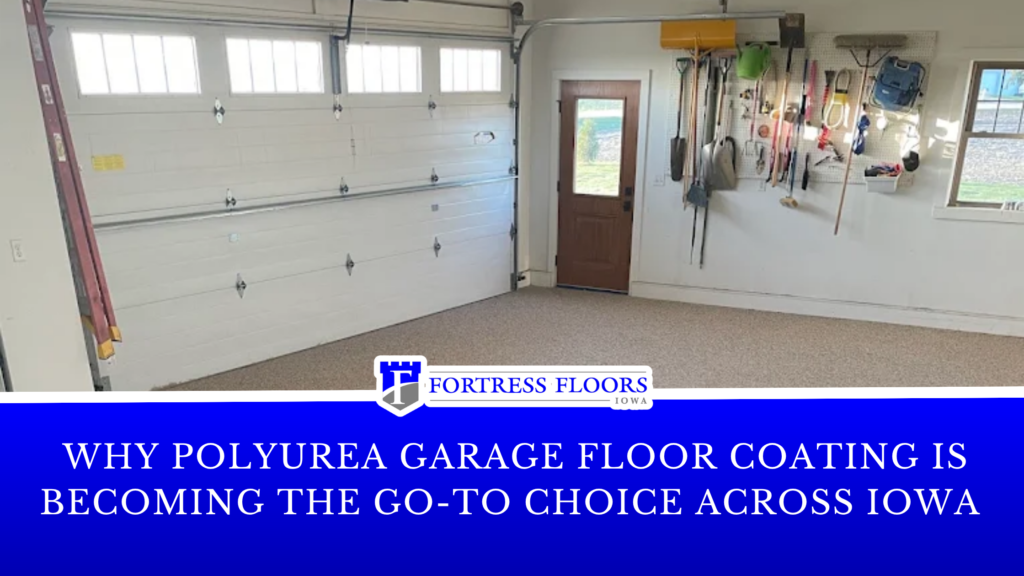
A typical garage system has three layers. The crew rolls on a polyurea base coat, broadcasts color flakes into it while it’s wet, and seals everything under a clear, UV-stable topcoat. The flakes add texture and grip, while the topcoat takes the daily wear.
Why Is Iowa So Hard on Garage Floors?
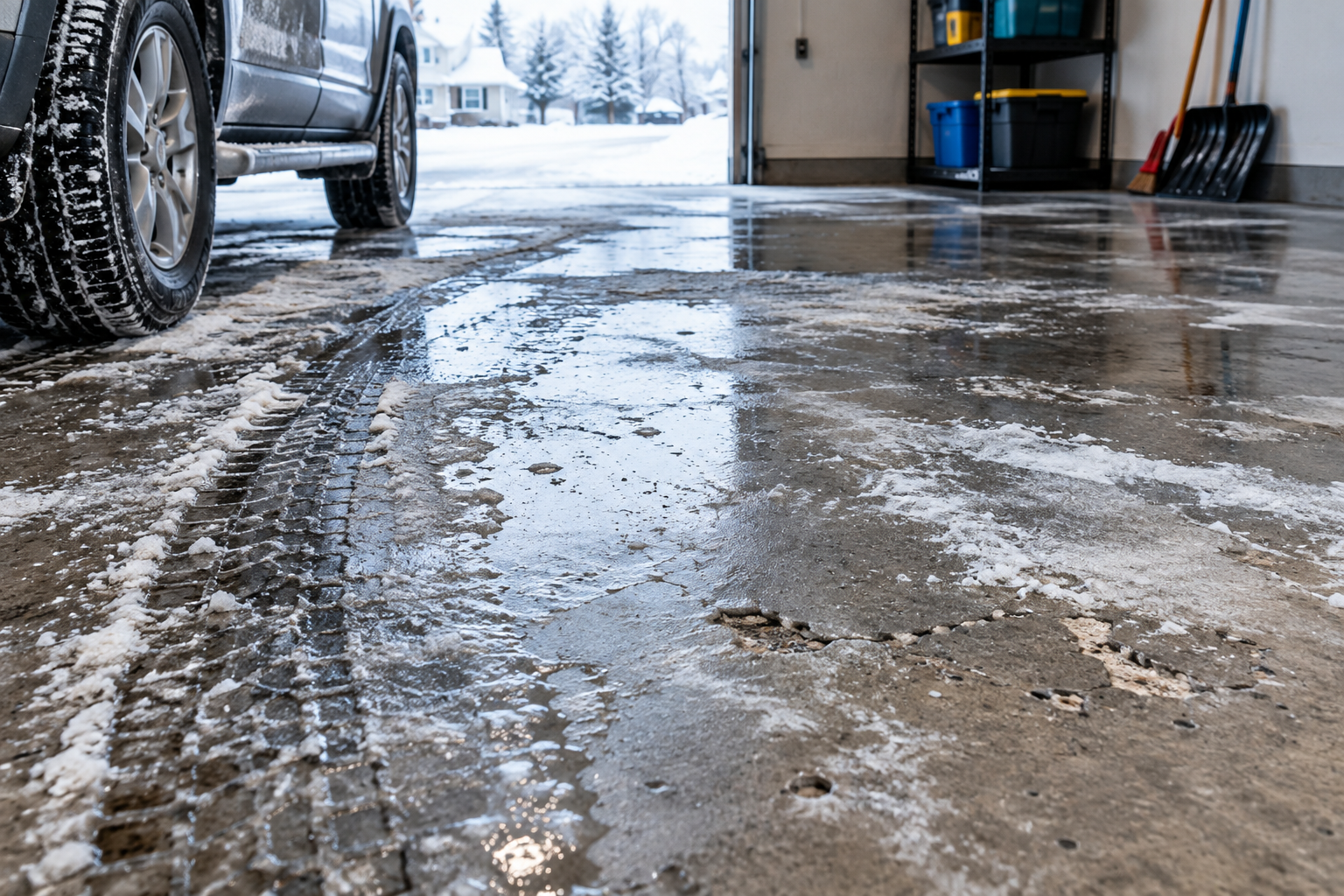
Three things wear down Iowa garage floors: road salt, freeze-thaw cycles, and moisture. Each one alone is manageable. Together, they break down bare concrete faster than most homeowners expect.
Road Salt Rides In on Every Tire
The Iowa Department of Transportation reports using more than 101,000 tons of salt and nearly 25 million gallons of brine in an average year. That’s on state highways alone, before cities and counties add their share. Plenty of it rides home in your wheel wells.
Researchers at Princeton University have studied what happens next. Salty water that freezes on concrete pulls thin flakes off the surface, a type of damage called salt scaling. Each lost flake leaves the slab more exposed to the next round.
Freeze-Thaw Cycles Open Up Cracks
Iowa doesn’t freeze once and stay frozen. Temperatures bounce above and below 32°F again and again throughout the winter. Water trapped inside the concrete expands every time it freezes, and hairline cracks slowly turn into pits and spalls.
Summer Humidity Pushes Up From Below
Summer brings its own problem. Humid air and heavy storms drive moisture into the slab, and that moisture can push a poorly bonded coating loose from underneath. Whatever goes on your floor has to handle water from both directions.
Why Are Iowa Homeowners Choosing Polyurea Over Epoxy?
Polyurea simply holds up better in a cold, salty climate. It stays flexible when temperatures swing, shrugs off salt and stains, keeps its color in sunlight, and cures fast enough to finish most garages in a day. Epoxy costs less to buy, yet it tends to crack, yellow, or peel sooner under Iowa conditions.
It Keeps Water and Salt on Top
Polyurea doesn’t absorb anything. Slush, brine, oil, and antifreeze sit on the surface until you squeegee or wipe them away. The concrete underneath stays dry and protected.
It Flexes Instead of Cracking
Epoxy cures hard and brittle. Concrete shifts slightly as temperatures change, and a rigid coating eventually cracks or lets go. Polyurea has enough give to move with the slab, which is why it survives winters that knock epoxy loose.
It Won’t Turn Yellow
Leave the garage door open on enough sunny afternoons, and many epoxy floors slowly fade to amber. Polyurea topcoats are UV-stable. The color you pick on install day is the color you keep.
It’s Safer Underfoot
Wet concrete is slippery, and wet epoxy can be worse. The flakes and textured topcoat on a polyurea floor give your shoes something to grip. That matters when you’re carrying groceries across a floor covered in snowmelt.
It’s Usually Done in a Day
Most epoxy jobs need several days before you can park on them. Polyurea cures in hours, so a typical two- or three-car garage gets coated in a single day. Your vehicles are back inside soon after.
Is Epoxy Ever the Better Pick?
Epoxy still has a place, mainly in heated indoor spaces that see little sun or salt. A working Iowa garage is a different story, and polyurea is usually the smarter long-term buy. Our guide to epoxy vs. polyurea garage floor coating breaks down the differences in more detail.
Polyurea vs. Epoxy vs. Bare Concrete: How Do They Compare?
Here’s a quick side-by-side of the three most common garage floor choices in Iowa.
| Feature | Polyurea CoatingBest choice | Epoxy Coating | Bare Concrete |
|---|---|---|---|
| Typical cure time | About 1 day | 3 to 7 days | Not applicable |
| Moisture and salt resistance | Excellent | Moderate | Poor |
| UV resistance | Does not yellow | Often yellows | Not applicable |
| Flexibility in temperature swings | High | Low (prone to cracking) | Low |
| Hot tire pickup risk | Very low | Moderate to high | None |
| Stain resistance | Excellent | Good | Poor |
| Long-term maintenance | Simple cleaning | Recoating is often needed | Sealing and crack repair |
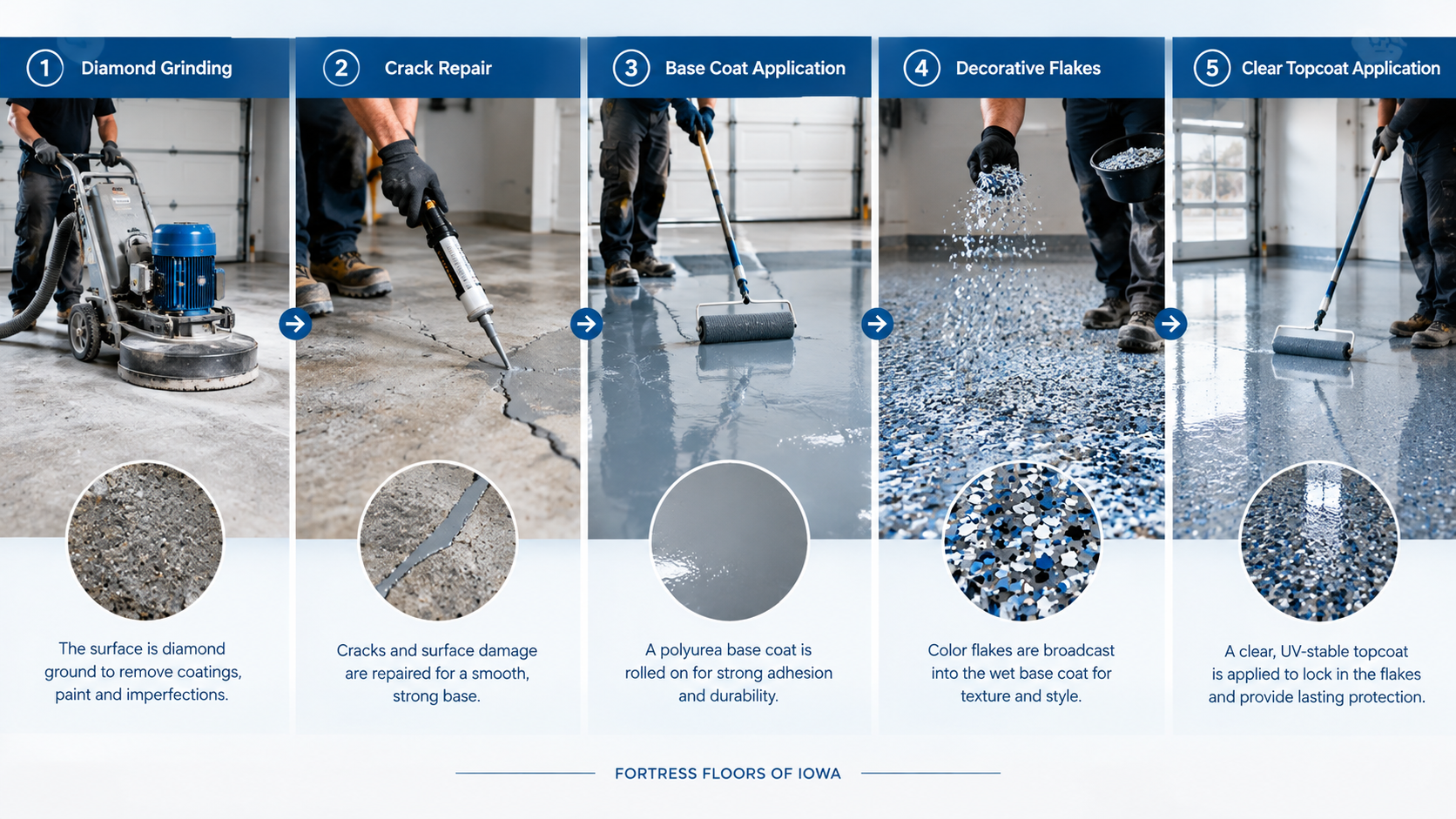
Professional garage floor coating involves concrete grinding, crack repair, base coat application, decorative flakes, and a protective topcoat.
Bare concrete costs nothing up front, yet you pay for it later in pitting and stains. Epoxy usually looks great for the first year or two. Polyurea is the one built to still look good after many Iowa winters.
How Is a Polyurea Garage Floor Installed?
A professional installation usually takes about one day. The crew grinds the concrete, repairs cracks, applies the base coat and flakes, and finishes with a clear topcoat. Here’s what that looks like on one of our jobs.
- We look at your floor first. We check the slab for moisture, cracks, and old coatings, then give you a free quote.
- We grind the concrete. Diamond grinding opens up the surface so the coating has something to grab. No other step matters more.
- We fix the damage. Cracks, chips, and pitted spots get filled so the finished floor looks smooth and even.
- We lay down the color. The base coat goes on, and flakes get broadcast across it while it’s still wet.
- We seal it. A clear, UV-stable topcoat locks in the flakes and gives the floor its shine and grip.
- We clean up and walk the floor with you. You see the finished result before we pack up.
Your only job is to clear everything off the floor before we arrive.
Why Do DIY Kits Often Fail?
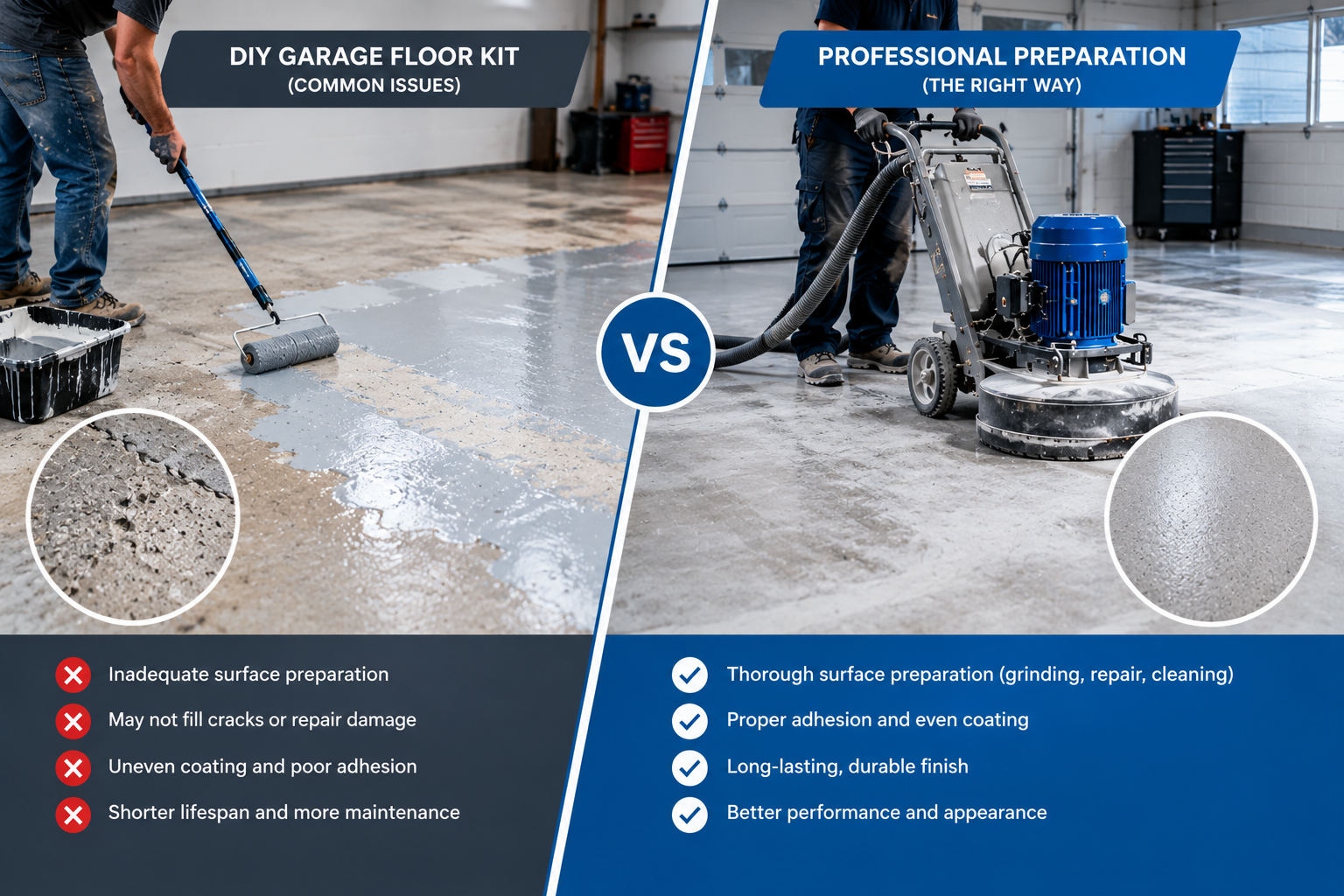
Store-bought kits rely on acid etching and a paint roller. Neither one opens up concrete the way a diamond grinder does, and poor prep is the top reason home coatings peel. One customer, Nancy, had an old garage floor that was badly pitted and cracked. Proper grinding and repair took care of both, and she says it looks perfect now.
What Colors and Styles Can You Choose?
Polyurea flake floors come in a wide range of blends, from soft grays and tans to bold, high-contrast mixes. You can also design your own. Hawkeyes fans can even go black and gold.
Our customers have done just that. One homeowner building a new house created her own flake blend for a three-stall garage. Another had a custom floor installed across a 28-by-60-foot garage and said the product turned out even better than expected.
Flakes also hide dust and tire marks between cleanings, which busy families appreciate. Browse our garage floor colors to see the options. The same system works well in a basement, laundry room, or patio.
Is a Polyurea Garage Floor Worth the Cost?
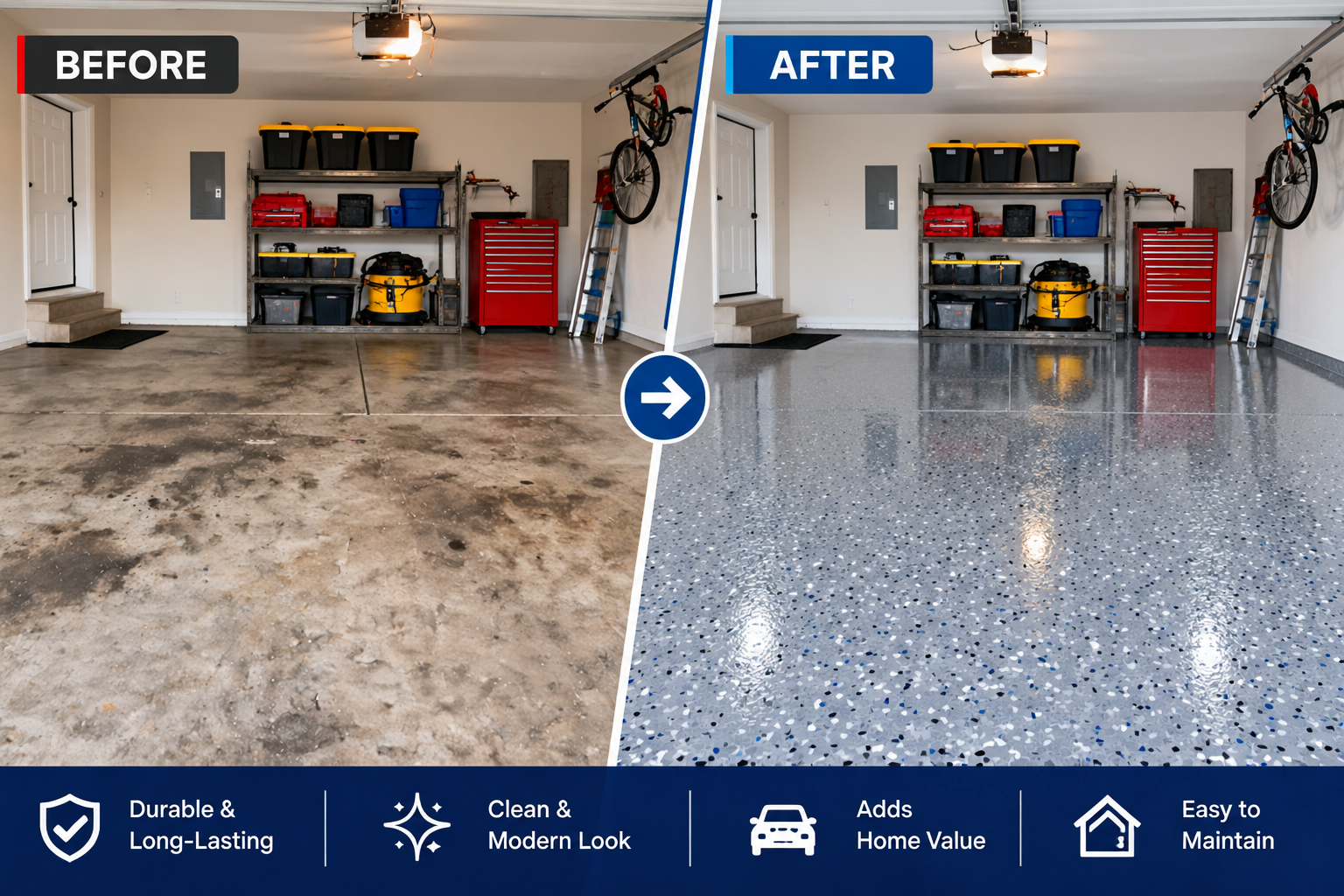
Most Iowa homeowners find that it is. Polyurea costs more up front than a DIY epoxy kit, but it lasts far longer and protects the slab underneath. A failed coating has to be ground off and redone, which often ends up costing more than doing it right the first time.
Think about what you’re protecting. Your garage slab is one of the most expensive surfaces in the house to replace. A sealed, finished floor also cleans up in minutes and gives buyers one more reason to like your home when it’s time to sell.
Your price will depend on a few things:
- Size of the garage in square feet
- Condition of the concrete and how much repair it needs
- Flake blend and any custom color choices
- Extra areas such as steps, landings, or a connected basement
Every floor is different, so we quote each one in person. Request a free on-site estimate and ask about financing through Synchrony, subject to credit approval.
How Do You Choose the Right Polyurea Installer in Iowa?
Look for real polyurea experience, a grinding-based prep process, a clear written warranty, and local reviews you can check. Polyurea cures fast, so it rewards a crew that knows exactly what it’s doing. Ask these questions before you hire anyone:
- How many polyurea floors has your team installed?
- How do you prepare the concrete before coating?
- What does your warranty cover, and for how long?
- Can you show me photos and reviews from local jobs?
Meet Fortress Floors of Iowa
Ben Lensing grew up in Iowa and has spent more than 25 years in construction. He and his team were trained by the original Fortress Floors owners. Ben also runs a radon mitigation company, so safety shapes how he approaches every floor.
Our reviews tend to mention the same things: crews that show up on time, work hard, and leave the garage clean. One family shared that the crew started early, worked into the evening, and came back at 7 a.m. to finish. Ben then stopped by a day later to make sure they were happy with the result.
We’re based in Decorah and serve Waterloo, Cedar Falls, Dubuque, Decorah, Waverly, Independence, and Oelwein. Our crew also covers La Crosse, Platteville, and Prairie du Chien in Wisconsin. See our full garage floor coating services to learn more.
Ready for a Garage Floor That Can Handle Iowa?
Iowa winters will keep throwing salt, slush, and freeze-thaw cycles at your garage. A polyurea garage floor coating gives your concrete a waterproof, UV-stable shield that’s installed in about a day. That combination is why more homeowners across the state are making the switch.
Ready to get started? Contact Fortress Floors of Iowa to request a free estimate. You’ll find more flooring tips on our Fortress Floors blog.